If you’re wondering how to use a marine radio effectively, it all starts with knowing the right channels and proper etiquette.
Using the radio correctly can keep you safe, help you communicate clearly, and avoid misunderstandings on the water.
Get familiar with the basics, and you’ll be ready for smooth, responsible radio use.
The details follow to help you master this essential skill.
Why Channel 16 Is the Heart of Marine Radio Communication
Channel 16 is the designated emergency and safety frequency in marine radio communication, making it the most important channel you should access during a crisis. It is the quickest way to alert the Coast Guard and nearby vessels when you need help. To do this effectively, you must follow strict protocols: immediately switch to Channel 16, transmit “MAYDAY,” and clearly state your vessel’s name, precise location, and the nature of the emergency. A reliable fish finder for boat can also enhance your situational awareness by helping you navigate safely and avoid underwater hazards, but proper radio use remains critical for communication. For optimal audio clarity during these critical transmissions, a quality marine subwoofer in your boat’s sound system can help ensure you hear distress calls clearly. To maintain your equipment’s reliability, you should perform routine radio checks to verify transmission power and antenna condition.
This channel is reserved solely for urgent distress signals and safety calls, so avoid using it for casual chatter or non-emergency communication. Once initial contact is established, switch to a dedicated working channel for your detailed conversation. While underway, you should monitor Channel 16 constantly, utilizing a dual-watch system if your radio supports it, to ensure you do not miss important calls. Proper discipline and adherence to these communication rules keep Channel 16 free for genuine emergencies, ensuring it remains your reliable lifeline on the water.

High Visibility Floating Core - The perfect compact VHF radio for marine use on any size vessel, designed with a high-visibility orange floating core for buoyancy and easy retrieval if dropped overboard

The Atlantis 155’s submersible, Floating Handheld design allows you to stay secure and connected while having fun on the water.
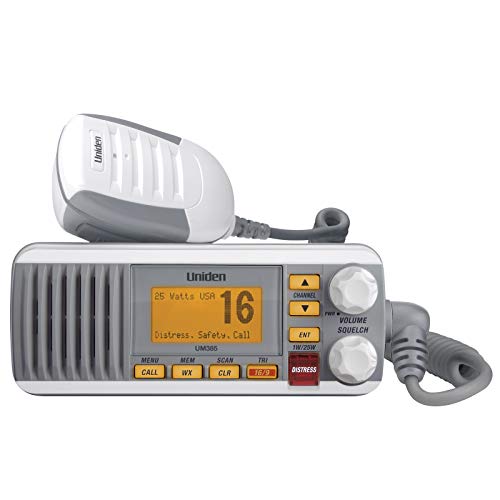
Uniden's Marine Radios protect you from what lies ahead, as well as getting you out of dicey waters, by informing you the moment a storm starts brewing and transmitting your location should you need help.
What to Know Before Your First Call
Before keying the microphone for your first call, select the appropriate channel. For initial contact, use Channel 9 or 16, which are designated for calling and emergency communications. Immediately switch to a working channel like 68 or 72 afterward to keep emergency lines available for urgent calls. Before transmitting, listen for several seconds to confirm no one else is talking—this prevents interrupting ongoing communications. Proper channel selection and listening are essential to ensure clear and efficient communication. Understanding marine radios helps boat owners grasp the basics of how these systems operate in practice. For critical emergencies, a dedicated EPIRB provides an automated distress signal that complements radio communication. Anglers can also apply similar radio discipline when coordinating with others on the ice, just as they would rely on top fish finders for locating fish.
Prepare your message beforehand. Have your vessel name, position, and request ready. Begin by stating the station’s name three times, then say “this is,” followed by your vessel identification and “over.” Briefly describe your purpose, then promptly switch to your chosen working channel. Clear and concise initial contact helps avoid confusion and ensures your message is understood.
Speak slowly and clearly, holding the microphone about a few inches from your mouth. Avoid shouting, as it causes distortion. Use short, factual phrases to maximize clarity. After transmitting, wait for a response before repeating or continuing. Good preparation and proper radio etiquette guarantee your first call remains effective and professional.
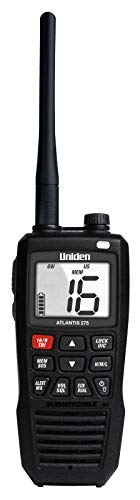
The Atlantis 275 comes with 6 Watts of Big-Ocean Power in a compact Submersible Floating Handheld VHF Marine Radio, and even includes an Emergency Strobe Light and built-in Flashlight Feature.

JIS8 Waterproof Level - Uniden MHS75 VHF Hand Held Radio won't give up no matter how wet it gets. Whitecap splash, gusty spray, tidal wave, whatever, this radio can take it. The Uniden MHS75 2-way Marine Radio is built rugged to take the rigors of being out on the water, day in and day out with a full JIS8 waterproof rating. It also features a floating design, and is submersible for up to 30 minutes at five feet.

Efficient Signal Distribution : This VHF antenna power splitter allows AIS transponder and marine VHF radio to share one antenna, delivering stable signal division within 136 to 174 MHz range and supporting up to 100W transmission for reliable marine communication.
How to Make Distress, Urgency, and Safety Calls
For safety warnings about hazards or severe weather conditions, use SÉCURITÉ (pronounced say-cure-ee-tay) on Channel 16. After making the announcement, move to a working channel to discuss details. Following these radio protocols carefully is essential, as they help prioritize communication based on urgency. Speak slowly, clearly, and avoid unnecessary words to ensure your message is understood. Do not clutter Channel 16; switch to a different channel when instructed or when your message is complete. If you need to locate underwater hazards, consider pairing your radio with one of the top depth finders from the ultimate guide to enhance your situational awareness. For catfish anglers, choosing a model with high-resolution sonar can help identify promising underwater structures where catfish often feed. For anglers on a budget, a reliable fish finder often provides excellent value while still offering accurate depth readings and fish detection.

Delivers uninterrupted depth readings from 2.5 to 600 feet on the largest display available on an In-Dash Depth Sounder up to 60 mph. Transducer Frequency-200 kHz

Dual Beam Sonar: Choose from a narrow and a wide beam for great detail or a generous coverage area, helping you identify fish, structure and contours.

This unit comes packed with a transom mount transducer.
The Right Way to Hail Another Vessel (and Move Off Channel)
To hail another vessel properly, repeat the target boat’s name two or three times, then say “this is” followed by your vessel’s name. End with “over” to invite a reply. Using your boat’s name for identification keeps the call clear and concise, and avoids confusion with personal names. This protocol ensures effective communication, especially when radio channels are crowded.
If you don’t get a response, repeat the hail once more without rambling. Keep your message brief and focused; avoid unnecessary details or lengthy explanations. Once the other vessel responds, immediately suggest switching to a different channel, such as “Suggest switching to channel 72.” Wait for their acknowledgment before both of you change channels. Confirm the new channel aloud to avoid misunderstandings and then continue your communication there.
Switching channels promptly and clearly helps keep the main hailing channel open for other vessels. Speak slowly and clearly, enunciating each word, to maximize understanding. Keep transmissions brief and to the point to prevent confusion and ensure effective communication on busy waterways. Similarly, a clean, reliable job when mounting sensitive electronics like a LiveScope transducer requires careful attention to wiring and cable management to avoid signal interference.
![Standard Horizon HX210 6W Floating Handheld Marine VHF Transceiver [HX210]](https://m.media-amazon.com/images/I/31GYaZEn5GL._SL500_.jpg)
Box Content: HX210 Handheld VHF, Antenna, AC/DC Rapid charger cradle, Documentation | 3-year Waterproof Warranty.

High Visibility Floating Core - The perfect compact VHF radio for marine use on any size vessel, designed with a high-visibility orange floating core for buoyancy and easy retrieval if dropped overboard

FLOATING & WATERPROOF DESIGN – Built to IPX7 standards, the Icom M25EVO marine radio floats and flashes for easy retrieval if dropped in water.
Which Channels to Use Besides Channel 16
Once the conversation is no longer on Channel 16, you should switch to alternative channels for your main exchange. Besides Channel 16, you can use channels 68, 69, 71, 72, and 78A for recreational boat-to-boat communication. Channel 09 serves as a good secondary calling channel before moving to these options. For safety-related communication, use Channel 06 for intership safety and Channel 13 for bridge-to-bridge navigation near locks and shipping lanes. If you need to coordinate with the Coast Guard, switch to Channel 22A after their instruction. Keep in mind that regional differences may apply—local charts or marina guidance could assign different channels for your area. Always consult local allocation tables instead of assuming a universal pattern. Avoid using Channel 70, as it is designated solely for digital calling, and ensure that work-related chatter remains off Channel 16. For non-radio maintenance, you might also consider using a marine hour meter to track engine run time. To get accurate readings while on the water, you can also apply fish finder settings to better interpret underwater structures. A live sonar feature on modern fish finders provides real-time imagery of fish movement, which can greatly improve your catch rate compared to traditional sonar.

Lightweight and portable marine transceiver; RM01 handheld marine radio has a sleek design which is lightweight and easy to carry; it comes with a lanyard for easy hanging on the wrist; very suitable for use in environments at sea; such as youth sailing; fishing enthusiasts; kayak; motorboat; sailing club; beach security etc

Lightweight & easy to use; the RM01P features 3.5W transmit power to help anglers stay connected on rivers and lakes; the included belt clip and lanyard provide convenient carrying and one-hand operation

Uniden's Marine Radios protect you from what lies ahead, as well as getting you out of dicey waters, by informing you the moment a storm starts brewing and transmitting your location should you need help.
Don’t Make These Three Radio Etiquette Mistakes
Poor radio etiquette can undermine effective communication, even if you choose the best frequency. First, always listen before transmitting. Wait a few seconds after pressing the microphone to ensure the channel is clear and to avoid interrupting ongoing traffic or safety calls. This pause confirms that no one else is speaking and prevents you from stepping on critical messages. Investing in a reliable switch panel can help keep your radio’s power supply stable and interference-free. Similarly, reviewing the best anchor light for your boat can prevent confusion during nighttime anchoring, as a clear and reliable light helps other vessels understand your position. For optimal hull placement, consider consulting a depth finder review to avoid transducer interference with radio equipment.
Second, keep your transmissions brief and focused. The VHF marine radio is not a phone; long conversations block the channel and delay important traffic. Stick to essential information and make your call quick to allow others to transmit as needed. Clear, concise messages keep the channel open and efficient for everyone.
Third, use appropriate power levels and proper format. Use low power when communicating with nearby vessels to minimize channel congestion. Always identify your vessel clearly by stating your call sign or vessel name, and conclude your message with “over” to indicate you have finished speaking. This formal structure enhances clarity and helps maintain an organized, accessible channel for all users.
Why Personal Chat Doesn’t Belong on Channel 16
Personal chat does not belong on Channel 16 because it is reserved solely for distress signals, emergencies, and hailing. This channel is monitored constantly by the Coast Guard and is crucial for quick communication during urgent situations. Using it for casual talking ties up the line, making it harder for vessels in real need to get through promptly. Long conversations on Channel 16 can lead to the Coast Guard ordering you to switch to a different channel, and they may even disconnect your transmission if you persist. For those who prioritize clear audio on the water, investing in top marine bluetooth speakers can enhance your listening experience without interfering with radio communications. In fact, navigation lights must be displayed from sunset to sunrise and during periods of restricted visibility, which is a common legal requirement for all vessels underway. Reviewing navigation light reviews can help ensure your pontoon boat meets these visibility standards.
Instead, keep all personal and non-emergency communication on channels like 68 or 72. Use Channel 16 briefly to identify your vessel, hail others, and then switch to a working channel for the detailed conversation. Doing so ensures urgent messages are heard instantly, safeguarding everyone on the water. Remember, maintaining the intended purpose of Channel 16 helps prevent congestion and keeps emergency traffic clear.
Simple Radio Habits That Keep Everyone Safe
Maintaining discipline on the radio channel is essential for safety and efficiency. Always keep a close watch on Channel 16, which is reserved for distress calls and initial contact, and monitor Channel 13 for bridge-to-bridge traffic to stay aware of nearby vessel movements. Before transmitting, listen carefully to ensure you do not interrupt ongoing conversations. Keep your messages brief, speak slowly, and use plain English—avoiding slang—to enhance clarity.
Follow radio protocol strictly: reserve Channel 16 only for emergencies and calling, and switch routine conversations to a designated working channel. To reduce interference, fully insert the handset after each use to prevent accidental open-mic errors, and apply low power settings when communicating with nearby vessels. Use the appropriate channel for its specific purpose, and never transmit false or misleading messages. For anglers who also rely on electronics, some modern units like Garmin fish finders integrate advanced sonar to complement radio safety by helping locate hazards beneath the ice. These small but vital habits keep the airwaves clear, enhance safety, and promote smooth communication between all users.
How to Handle a Real Emergency: MAYDAY Calls Step by Step
When facing a life-threatening emergency on the water, sending a clear MAYDAY call is essential for rescue. Start by tuning your radio to VHF Channel 16, the globally recognized distress frequency. If your radio fails, troubleshoot immediately by checking power sources and antenna connections. If available, press the DSC distress button first to send digital distress alert signals, then follow up with a voice transmission.
Begin your call by repeating “MAYDAY, MAYDAY, MAYDAY” three times to grab attention. Introduce your vessel by stating, “This is [vessel name]” three times, followed by your call sign once. Repeat “MAYDAY” and your vessel’s name to reinforce your distress signal.
Provide your exact position using latitude and longitude or bearings to known landmarks. Clearly describe the emergency—whether it is a fire, flooding, or a person overboard. Specify what kind of assistance you need, such as evacuation, towing, or medical aid. Report how many people are aboard and if there are injuries. Use short, calm message patterns to ensure clarity, avoiding unnecessary details or panic in your transmissions.
If you do not get a response, repeat the call. Stay on Channel 16 and keep the microphone ready for any follow-up instructions. If you have an Emergency Position Indicating Radio Beacon (EPIRB), activate it as soon as possible; it can transmit your distress signal via satellite for faster location. Your ability to make a clear, practiced call can make the crucial difference between rescue and disaster.