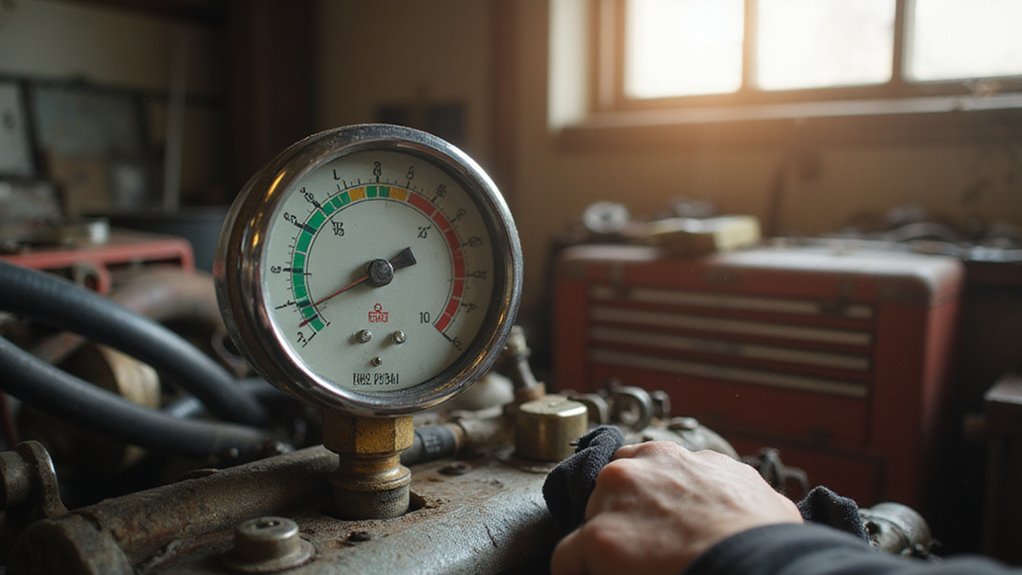
Wondering how to read your oil pressure gauge correctly? It’s simple once you know what the readings should look like for a healthy engine.
Whether your engine is cold or warmed up, understanding these numbers helps you catch problems early and keep your engine running smoothly.
Let’s walk through what you need to know to interpret your oil pressure gauge accurately.
What Your Oil Pressure Gauge Actually Means
The oil pressure gauge provides a real-time measurement of the force your oil pump creates to circulate lubrication through your engine. It doesn’t indicate your oil level but instead acts as a vital indicator of whether bearings and moving parts are receiving proper protection. You may notice fluctuations in oil pressure during acceleration or deceleration; these often point to wear in the pump or a failing relief valve. A steady, midrange pressure usually indicates that your lubrication system is functioning correctly. However, calibration issues, such as a faulty sender or wiring problems, can cause misleading readings that mimic potential trouble. Low oil pressure can signal insufficient lubrication caused by a leaky pump or clogged filter, while abnormally high readings might suggest blockages elsewhere in the system. Unusual changes in the gauge readings serve as early warning signs of developing engine damage. Every out-of-range measurement should be treated as diagnostic information rather than noise. Understanding the basics of oil pressure helps you interpret these fluctuations accurately. For marine applications, a reliable gauge is as essential as choosing the right depth finder for your boat to ensure safe operation. Monitoring these fluctuations helps you catch problems early, preventing costly repairs and ensuring your engine remains properly lubricated. If you suspect the gauge itself has failed, you can perform a physical dipstick check to verify the actual oil level in the engine.
Normal Oil Pressure at Cold Start vs. Warm Idle
At cold start, oil pressure typically ranges from 45 to 80 PSI for gas engines. This higher reading occurs because cold oil is thicker and creates more resistance in the system. As the engine warms up, the oil’s viscosity decreases, causing the pressure to drop and stabilize at a lower level. Once at operating temperature, a normal warm idle oil pressure usually falls between 10 and 30 PSI, with 20 to 35 PSI being common for many vehicles. If your gauge remains near the higher end when hot, it could indicate a stuck relief valve. Conversely, a stable low reading when warm is generally acceptable if it aligns with your vehicle’s specifications. Be cautious if the pressure unexpectedly drops below 10 to 15 PSI, as this may signal worn bearings or low oil levels and could lead to increased engine noise. Just as a fuel sending unit relies on a float to measure tank levels, an oil pressure gauge depends on a sensor to accurately report pressure changes. Similarly, marine bluetooth speakers must resist water and vibration to maintain clear sound on the water. A bouncing needle during warm idle may be caused by a faulty sensor or a worn oil pump.
How to Read Your Oil Pressure Gauge Before Starting
Before you start the engine, check your oil pressure gauge and note its position with the ignition on and the engine off. It should rest at or near zero, providing a static baseline. This initial reading helps verify that the sensor and indicator are functioning correctly before oil pressure builds up. Turn the key to the on position without starting the engine, then observe the gauge. A reading that remains high indicates a possible open sender circuit or wiring fault. If it stays at zero, the cluster power might be disrupted. Remember, this pre-start check is not the operating pressure—it’s just a quick verification. Compare what you see with your vehicle’s service manual specifications. If you suspect a malfunction, disconnect the sender wire with the ignition on to further isolate the issue. For an accurate assessment, pair this with a mechanical test gauge to confirm the actual oil pressure. This process is similar to verifying a fish finder’s baseline reading before the transducer sends a pulse underwater. Just as with a boat speedometer, the gauge’s pre-start zero reading ensures the system is ready for accurate measurement once the engine is running. New anglers often rely on user-friendly features to simplify initial setup, much like a pre-start check eliminates guesswork.
5 Oil Pressure Readings That Signal Immediate Danger
If your oil pressure gauge drops to zero while the engine is running, it indicates that you have lost all lubrication pressure. This is a critical warning that the engine is at immediate risk of severe damage. You should shut the engine down immediately to prevent destruction. Do not continue driving to a nearby shop or home; instead, tow the vehicle to a mechanic. A needle entering the red zone also signals urgent danger—whether dangerously low or high, both scenarios threaten the engine’s safety. If the oil pressure reads below 5 PSI, it suggests that the protective oil film has likely broken down, increasing the risk of engine wear or failure. Additionally, if the red warning light comes on alongside the gauge, it is not merely a reminder but a clear sign that you must stop immediately. An unstable or jumping needle indicates an issue with system stability or a malfunctioning gauge. Paired with knocking noises, these erratic readings demand that you turn off the engine without delay. Ignoring these signs can lead to catastrophic engine damage; your engine’s survival depends on immediate action. Upgrading to a more reliable monitoring system, like a quality fish finder, can help you spot such critical warnings on the water with greater clarity. However, a zero reading could also result from a faulty sending unit or wiring issues, rather than a true loss of pressure. For reliable performance on the water, you should also consider a model that offers superior saltwater performance for durability in harsh marine environments.

★Package Including:9 Items ,Copper tube*1,necessary brass thread kits *7,When you receive it, please check it in time.

Helps restore oil pressure gauge to proper operation

[Package] Includes 8 items, metal tube*1 and necessary thread kits*7. Check after receiving.
6 Common Causes of Low or Erratic Oil Pressure
Low or erratic oil pressure can stem from several mechanical issues. A worn oil pump is a common culprit; it can’t maintain proper flow, resulting in persistently low pressure, especially at idle or when the oil is hot. Excessive bearing clearance allows oil to escape faster than the pump can replenish, causing pressure to fall as the engine warms up. Using the wrong oil viscosity can also give misleading readings: too thin and pressure drops, too thick and it spikes cold then crashes hot. Clogged filters or sludge-filled passages restrict oil flow and can mimic pump failure. Additionally, a faulty sending unit—due to corroded wiring or a damaged sensor—may cause the oil pressure gauge to fluctuate erratically when mechanical pressure remains normal. Just as a fish finder uses sonar technology to locate underwater obstructions, a faulty sending unit can obstruct your gauge’s accuracy. Just as a night vision camera enhances visibility in low light, a properly functioning gauge system relies on clear electrical signals to deliver accurate readings. Lastly, a stuck-open pressure relief valve prevents pressure from building, so you’ll see chronically low readings across the engine’s RPM range. Before replacing any parts, you can confirm a suspected sending unit issue by swapping in a manual gauge to compare live mechanical pressure against the dashboard reading.

【High Quality】A ABIGAIL Oil Pressure Sensor is made of high quality material which is reliability, and durability. With the new sensor on, your vehicle will have a new life.

Engine oil pressure sensor sender/switch replacement for: 1998 1999 2000 2001 2002 Dodge Ram 1500 Pickup | 98 99 00 01 02 03 Dodge Ram 2500 3500 Pickup | 1998 Jeep Grand Cherokee | 1998 Jeep Wrangler/TJ | 1998-2002 Dodge Durango/Dakota | 1999-2003 Dodge Ram 1500 2500 3500 Van | 1998 Dodge B1500 B2500 B3500

OEM Number: The oil pressure sensor replace OEM#5149064AA, 5149062AA,56028807AB, 5093908AA, 5080472AA, 1S10853, 1S7937, 7B0919081C, PS317, PS701, PS598, PS401. Please make sure that the OEM number fits your old part before placing an order
When Low Oil Level Is the Real Cause of Low Pressure
If low oil level is causing low pressure, you’ll notice the oil in the tank is below the MIN mark on the dipstick. This simple issue affects pressure because the oil pump needs enough oil in the pan to draw from; when the oil is low, the pump can’t maintain proper pressure. The pressure gauge may fluctuate or read intermittently as oil moves away from the pickup, especially during high RPMs or aggressive driving.
To verify, turn off the engine and place the vehicle on level ground. Remove the dipstick, wipe it clean, then reinsert and pull it out again to check the oil level. If it sits below the minimum line, adding the correct amount of oil to specifications should restore proper pressure. After topping up, restart the engine and monitor the gauge. If the pressure normalizes, the low oil level was the cause. Always rule out simple supply issues before considering more complex faults like a worn pump or faulty sensor, as these are less likely than a straightforward oil level problem.

Fit engine: L4-1600cc W11B16A only
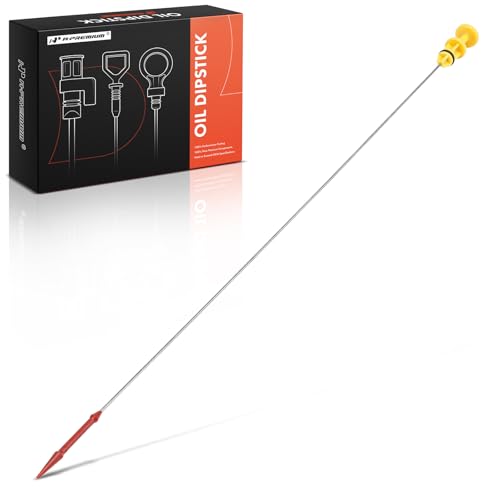
[Vehicle Fitment]: Compatible with Mini Cooper 2007-2013, Cooper Countryman 2011-2012, Cooper Countryman 2014-2016, Cooper Paceman 2013-2016

Why Your Oil Pressure Gauge and Warning Light Disagree
Your oil pressure gauge and warning light often disagree because they use different trigger points for oil pressure. The warning light typically activates at a low pressure threshold, around 4 to 10 psi, using a simple on/off switch. In contrast, your gauge displays a calibrated range, which can show usable oil pressure even when the warning light is on. This calibration difference means you should not assume that a zero reading on the gauge always indicates no oil pressure; the warning light may activate before the gauge registers a dangerously low pressure. For example, just as a top horn button must be chosen based on specific marine electrical requirements, understanding the specific calibration of your gauge is essential for accurate interpretation. For marine installations, selecting components with the right sonar compatibility ensures reliable system performance.
Wiring faults in the warning-light circuit can also cause discrepancies. A grounded wire or damaged connector can keep the warning lamp lit even when engine oil pressure is normal. Intermittent wiring issues can lead to flickering lights that do not match the gauge reading. Since the warning light and the gauge operate through separate circuits, one can fail without affecting the other. To avoid confusion, always check the wiring connections before assuming your engine has a pressure problem.

【All-in-One Monitoring】3in1 Multi-function Triple Gauge Set- Water Temperature:104°F-248°F, Oil Pressure:0-145PSI, Voltmeter:9- 32V. Sensor- 1/8NPT Thread Water Temp Sensor (Standard Resistance Value: 310-22ohms). 1/8 NPT Oil Pressure Sensor 0-145PSI (Standard Resistance Value: 10-184 ohms)

GlowShift Tinted 7 Color Series Oil Pressure Gauge is Designed to Monitor & Display the Amount of Oil Pressure Running Through Your Car or Truck's Engine

Bezel O.D. :2.39
How to Diagnose a Faulty Oil Pressure Gauge
To diagnose a faulty oil pressure gauge, start by grounding the sender wire with the key ON and the engine OFF. If the gauge doesn’t move to full scale, you likely have a wiring or gauge fault. If it swings normally, the problem may lie with the sender or pressure source. To confirm, compare the dashboard reading with a mechanical pressure gauge connected directly at the sender port. Accurate mechanical readings with a bad dash gauge suggest an electrical issue. For boat owners, ensuring your gauge is securely mounted can prevent vibration-related wiring faults.
Next, check the sender calibration using an ohmmeter to measure its resistance at different pressure levels. If the resistance doesn’t change when pressure varies, the sending unit has probably failed. Conduct a thorough wiring inspection: look for loose terminals, corrosion, or poor grounds that could cause inconsistent needle movement. Intermittent movement usually indicates bad connections rather than a dead gauge. Additionally, mechanical testing with an OTC gauge can reveal low pressure caused by bearing wear or sludge from a PCV valve malfunction, which impairs oil flow. A properly functioning temperature gauge should sit near the center under normal operating conditions, reflecting consistent engine heat. Finally, ensure the sender is compatible with your gauge; mismatched resistance ranges can produce false readings, so verify that the components match specifications.

FITMENT: Mechanical Oil pressure Sensor is Replacement for Any oil pressure Racing Car Auto gauge

Standard 2" black dial for 2-1/16" openings

All mounting hardware included for a complete repair
When to Shut Off the Engine and Inspect for Damage
If you see a red oil-pressure warning or the gauge drops to zero, stop immediately. Continuing to drive can destroy engine bearings and cause severe damage. Safely pull over and turn off the engine without trying to restart it to see if the warning clears.
Once shut off, check the oil level and inspect for leaks. Look closely at the oil’s color: milky or metallic-flecked oil indicates internal damage. If you hear flickering, knocking, or unusual noises along with low pressure, it suggests active lubrication failure. Do not restart the engine if the oil level is normal but the warning persists. Persistent low pressure after topping up points to a mechanical fault that needs professional inspection. Address issues like sludge buildup, blocked filters, or pump problems immediately to prevent further damage.