Worried about your oil pressure warning? You want to know whether that tiny light or a more detailed gauge will keep your engine safe.
The quick answer is that the warning light is best for emergencies, but a good aftermarket gauge can help you catch gradual changes before it’s too late.
Keep reading to see how both can work together to protect your engine.
Why Your Car Needs an Oil Pressure Warning Light Now
The oil pressure warning light is non-negotiable for your engine’s survival. It acts as an immediate safety alert, not just an optional notification. When that light activates, the oil pressure has already fallen below a critical threshold—around 7 to 10 PSI. At this point, oil is no longer reaching essential parts like bearings and camshafts, allowing metal components to contact each other directly. Continuing to drive with the light on accelerates toward rapid engine failure. This isn’t a routine maintenance reminder; it’s an active warning of imminent damage. Ignoring it can lead to severe bearing wear or even a complete engine rebuild. The light prompts you to shut down the engine instantly, preventing permanent damage. You won’t notice or hear the problem developing in time, so when it glows, the safest action is to pull over immediately and turn off the engine. Trust this simple warning—your best protection against catastrophic repairs that can’t be fixed by guessing. Unlike a gauge that requires interpretation, this light provides a clear, binary signal of a critical threshold that eliminates guesswork during emergencies. In contrast, a fish finder on a boat requires interpreting sonar returns to locate fish, but an oil pressure warning light delivers an unmistakable binary alert that prevents engine destruction. For catfish enthusiasts, using a fish finder with a high-frequency transducer helps locate fish in murky waters.
How an Oil Pressure Gauge Saves You From Costly Repairs
An oil pressure gauge helps you detect lubrication issues early enough to prevent costly engine damage. Because it provides real-time readings, you can spot sudden drops to zero or fluctuating pressures that indicate low oil levels, a failing pump, or major leaks. Catching these signs early prevents metal-to-metal contact, which can cause bearing wear or engine seizure. For anglers using ice fishing electronics, choosing a portable fish finder with a reliable display ensures you don’t miss subtle signals, just as a gauge ensures you don’t miss early warning signs. Confirming a suspect reading with a mechanical gauge prevents unnecessary part replacements when troubleshooting wiring or sensor faults.
Diagnostic checks with the gauge—such as measuring pressure at cold idle, warm idle, and increased RPM—allow you to compare readings against manufacturer specifications. If you notice abnormal readings, confirming them with a mechanical gauge prevents guesswork and unnecessary part replacements. Often, a simple fix like topping off the oil costs far less than a complete engine rebuild. Identifying problems early with an oil pressure gauge can save you thousands of dollars in repairs. Similar to how underwater cameras provide real-time visual feedback on fishing conditions, the gauge gives you immediate insight into your engine’s health.

1.Easily display at night:Our oil pressure gauge is highly visible with a BLUE Light,easy viewing at all angles during any lighting conditions,practically and safely when driving at night

【FEATURE】 ZHSYMX Oil Pressure Gauge is Designed to Monitor & Display the Amount of Oil Pressure Running Through Your Car or Truck's Engine.

Updated! Gauge chip has been changed to a high-speed stepping motor. Features: fast pointer and accurate data.
Is That Factory Gauge Actually a Dummy Light?
A factory gauge is not a dummy light; it can provide useful trend information. However, because of buffering in its readings, it’s only a rough guide rather than a precise measurement. If you are unsure about your onboard instruments, you might want to install dedicated marine GPS navigation for additional engine monitoring. If the needle remains static regardless of throttle changes, you’re probably looking at a dummy gauge that doesn’t reflect actual conditions. For a more reliable alternative, consider the pitot tube’s performance in measuring water speed as a reference for engine load. To be certain, you should use a mechanical test gauge to verify what’s happening inside your engine. The gauge’s placement directly affects the accuracy of its readings, with the best spot being near the oil pump outlet.
Oil Pressure Light vs. Gauge: Which Fits Your Driving Style?
If you often drive your vehicle hard, a gauge is the better choice. It provides real-time feedback on oil pressure, allowing you to monitor fluctuations during aggressive driving, towing, or high RPMs. A gauge makes it easier to spot gradual pressure drops that could indicate issues like worn pumps or leaks before they cause damage. Sensor accuracy is crucial here; the needle’s movement offers detailed insight to help you take preventative steps.
For everyday driving and routine commutes, a warning light is more suitable. It signals only when there’s a critical problem—illuminating red and prompting you to stop. This straightforward alert minimizes distraction and dashboard clutter, so you can keep your focus on the road. The light is designed for quick recognition during normal driving, providing a clear emergency warning without requiring interpretation or close inspection.

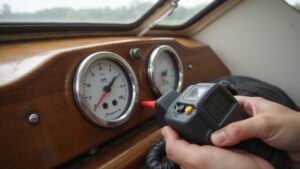
Exquisite design: Oil Pressure Tester Tool have dual display pressure gauge head, clear scale, easy to clean, and equipped with rubber buffer protection cover, shockproof and scratchproof.

Standard 2" black dial for 2-1/16" openings

Helps restore oil pressure gauge to proper operation
Get the Best of Both: Oil Pressure Light and Gauge Combo
A combo oil pressure light and gauge setup provides both immediate alerts and continuous detail. The warning light activates instantly if pressure drops dangerously, catching your attention quickly. Meanwhile, the gauge displays ongoing trends, fluctuations, and intermittent issues that a warning light alone might miss. This dual approach ensures you don’t miss rapid pressure drops that could cause damage, while also diagnosing underlying or seasonal engine performance changes. Understanding what an oil pressure gauge is and how it works in practice helps boat owners choose the right setup for their engine, especially when comparing options like those in Garmin ECHOMAP for marine navigation and monitoring. Sensor calibration guarantees the gauge’s readout remains accurate over time, and the warning light’s durability ensures it functions reliably when needed most. These units often combine components into a single housing, saving dash space and simplifying wiring. With both indicators working together, you can spot pressure rises with increased rpm, diagnose pump or bearing problems early, and keep ahead of potential engine failures. A unit like the Innovate Motorsports 3852 MTX Digital Series Dual Function gauge offers programmable visual alerts for critical oil conditions via its outer LEDs. Adjusting the gain and ping speed on related monitoring systems improves signal clarity, just as fine-tuning your display settings helps you distinguish real fluctuations from background noise.

Exquisite design: Oil Pressure Tester Tool have dual display pressure gauge head, clear scale, easy to clean, and equipped with rubber buffer protection cover, shockproof and scratchproof.

LED Display for Instant Readability: Digital 0-150PSI oil pressure gauge combines a bright red LED numeric readout with a sweeping visual needle - see exact PSI values and pressure trends at a glance, even in bright sunlight or night driving. No more squinting at analog dials

Traditional incandescent lighting illuminates around the perimeter of the dial