Wondering where your oil pressure gauge should be making a good read? If your engine’s warm and running smoothly, it’s typically around 15-20 PSI at idle and 40-60 PSI at higher speeds.
During a cold start, spikes up to 100 PSI are normal. A steady needle indicates healthy oil flow, while sudden jumps could signal trouble.
Keep reading to learn more about normal ranges and what to watch for.
What Your Oil Pressure Gauge Reads When the Engine Is Off
When the engine is off, your oil pressure gauge should typically read zero. If the needle doesn’t settle at zero or bounces around, you’ll need to check the gauge calibration. An offset from zero may indicate a calibration drift, meaning the gauge no longer displays the correct pressure. Also, inspect the electrical wiring between the sender unit and the gauge. A short circuit to power can falsely elevate the reading, while an open circuit can cause the gauge to peg high or stay stuck. With the key in the on position but the engine off, the gauge might sweep temporarily, but it should return to zero once the circuit stabilizes. Ensuring you have a proper electronics box can help protect marine gauge wiring from corrosion and short circuits. If you suspect a mechanical issue, you can check oil pressure by listening for unusual engine noises, such as a persistent ticking or tapping from the valve train. A faulty sender unit is another common cause of a gauge that fails to read zero when the engine is off. Never assume an engine malfunction without first testing these components to rule out electrical or calibration issues.
Normal Oil Pressure Gauge Reading at Warm Idle
Your oil pressure reading at warm idle typically falls between 15 and 20 PSI for many vehicles. This range indicates that your engine’s lubrication system is functioning properly at idle. Some newer engines with variable-displacement oil pumps may operate at lower pressures without issue, so don’t be alarmed if your needle shows around 10 PSI. However, if you notice a sudden drop below 10 PSI, it’s a sign to investigate further. Over time, engine wear, such as worn bearings, can gradually decrease your idle oil pressure. Always refer to your owner’s manual for the exact specifications for your specific make and model. If your hot idle pressure drops consistently below about 10 PSI, it usually warrants a professional inspection to prevent potential engine damage. For boats, using a dedicated fish finder can help you monitor water temperature and other conditions that affect engine performance. For a reliable installation of any monitoring component, following a step-by-step guide for mounting and wiring ensures clean and accurate readings. When using a fish finder, selecting a model with sonar technology designed for deep water can improve your catfishing success.

Standard 2" black dial for 2-1/16" openings

All mounting hardware included for a complete repair
Oil Pressure Gauge on the Highway: What to Expect
On the highway, your oil pressure gauge should typically read between 40 and 60 psi when the engine is warm. This range occurs because your oil pump spins faster as engine RPM increases, boosting oil pressure. The gauge should hold steady within this range and not bounce around excessively. Short spikes during acceleration are normal, but a consistent low reading below 25 psi signals a problem. Such low pressure can indicate low oil levels, worn bearings, or a failing oil pump. If the gauge needle fluctuates wildly, it might be a sign that the sending unit itself has failed, since a faulty sensor can give erratic readings. Trust your sensor—an accurate reading is crucial for engine health. Higher pressure readings, around 60 to 70 psi under load, are acceptable. However, if you notice the pressure remains low while cruising at speed, it requires immediate inspection to prevent engine damage. Your engine depends on proper oil pressure to protect its moving parts, so keep a close eye on the gauge and don’t ignore any persistent issues. Similar to how adjusting sonar settings ensures clear readings on a fish finder, fine-tuning your engine’s oil pressure monitoring can prevent costly damage. Choosing a high-quality sensor ensures reliability, much like selecting top-rated marine electronics for accurate performance.

【All-in-One Monitoring】3in1 Multi-function Triple Gauge Set- Water Temperature:104°F-248°F, Oil Pressure:0-145PSI, Voltmeter:9- 32V. Sensor- 1/8NPT Thread Water Temp Sensor (Standard Resistance Value: 310-22ohms). 1/8 NPT Oil Pressure Sensor 0-145PSI (Standard Resistance Value: 10-184 ohms)

High Night Visibility: Equipped with a bright white LED light for clear visibility in all lighting conditions, ensuring safe driving at night.

FUNCTION: This 0-140 PSI Oil Pressure Gauge is Designed to Monitor and Display the Pressure Running Through the Fuel System of Your Car or Truck
Why Cold Start Oil Pressure Spikes Are Normal
A cold-start oil pressure spike is normal and not a sign of trouble. When your engine is cold, the oil’s viscosity is higher, meaning the oil is thicker. This thicker oil requires your oil pump to work harder to circulate it, which temporarily raises the oil pressure. At the same time, a slightly increased idle speed during startup adds to this effect, often causing a brief peak on your pressure gauge.
Your engine’s relief valve manages this situation by opening to divert excess pressure, preventing damage to the system. It’s designed to handle these spikes without issue. Some engines can reach 100 PSI at idle when cold, which is within expected parameters. These short-lived pressure increases are a normal part of starting your engine and ensuring proper lubrication from the outset.
As the engine warms up, the oil’s viscosity decreases, and the pressure smoothly drops back into the typical range of 25 to 65 PSI. If after warming, the pressure remains high on the gauge, that could indicate an issue. But a brief, normal pressure spike during cold start is just your engine’s way of ensuring everything is functioning as it should.
How to Read Your Oil Pressure Gauge: Steady vs. Jumpy Needles
A steady needle on your oil pressure gauge generally indicates proper oil flow and correct gauge calibration. It should move smoothly in response to RPM changes and stay within the manufacturer’s normal range. Instead of fixating on a specific PSI number, focus on consistent stability. If the needle jittered or bounced, it could signal an electrical issue, such as a failing sensor or loose wiring, or a real pressure problem caused by low oil levels or incorrect viscosity. Always check the wiring and connectors first if the gauge fluctuates unexpectedly. Even if the engine sounds fine, a wildly swinging needle outside the normal range usually points to a fault. Just as a temperature gauge should sit in the middle for optimal engine operation, your oil pressure gauge should also maintain a steady reading within its designated normal range. Remember, a steady but off-range reading still suggests a problem, highlighting the importance of calibration and proper maintenance. For a reliable electrical connection, ensure all gauge wiring is securely crimped and insulated to prevent intermittent signals. When selecting a replacement, prioritize models with a high-quality sending unit to ensure accurate and stable readings.

GlowShift Tinted 7 Color Series Oil Pressure Gauge is Designed to Monitor & Display the Amount of Oil Pressure Running Through Your Car or Truck's Engine

1.Easily display at night:Our oil pressure gauge is highly visible with a BLUE Light,easy viewing at all angles during any lighting conditions,practically and safely when driving at night

Helps restore oil pressure gauge to proper operation
Red Flags at Hot Idle: When Pressure Drops Below 10 PSI
If your hot idle oil pressure drops below 10 PSI, it’s a serious concern. This pressure level indicates that your engine’s oil film may be failing, risking internal damage. As the engine warms up, the oil becomes thinner, making it easier to slip past worn bearings and reducing pressure when the pump turns slower at idle. Don’t dismiss this warning—oil contamination from fuel dilution or oil breakdown can mimic low pressure by thinning the oil, so it’s essential to verify the reading with a mechanical gauge first. Afterward, check the oil level and viscosity to ensure they’re within proper ranges. Persistent pressure below 10 PSI when hot suggests issues such as excessive bearing clearance, a worn or tired oil pump, or a clogged pickup screen. If this low pressure accompanies knocking sounds or warning lights, it signals imminent engine failure and requires immediate diagnosis. Never continue driving in this condition—shut down the engine and identify the cause to prevent bearing damage or crank scoring. For a different kind of precision monitoring, anglers often rely on top fish finders for ice fishing to track underwater conditions. Similarly, these devices offer portable sonar technology to help locate fish in challenging environments. Your engine’s longevity depends on addressing this critical pressure drop quickly. When comparing tools for reliable data, reviewing quality and value across different models can help you choose a durable option that performs consistently under harsh conditions.

Features:100% brand new and never used. High sensitivity and easy operation. Mechanical Oil Pressure Gauge Diameter: 2 inch 52 mm

Standard 2" white dial for 2-1/16" openings
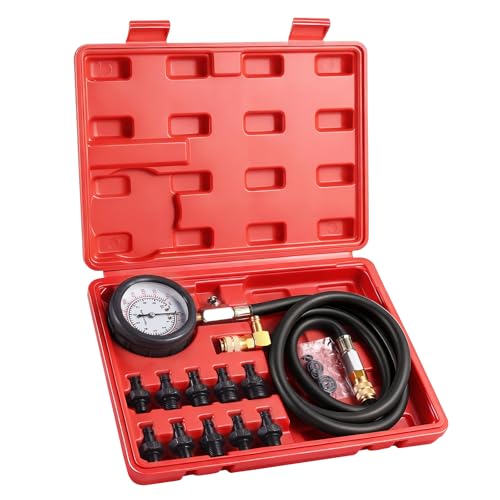
1. Accurate 0–140 PSI Dual-Scale Gauge Features a clear dual-scale pressure gauge (PSI/bar) with a rubber protective cover. Shock-resistant design ensures accurate readings during engine diagnostics.
Diesel and Truck Oil Pressure: What’s Different
Diesel engines generally show higher oil pressure readings than gasoline engines because they operate under higher cylinder pressures and heavier loads. Typical oil pressure at working RPM ranges from 40 to 70 PSI, while at hot idle, it’s often between 20 and 40 PSI on many light- to medium-duty diesels. These higher pressures help support turbocharger bearings and sustain heavy loads, ultimately protecting the engine against wear. Just like choosing a fish finder for beginners, selecting the right diagnostic tool ensures you monitor your engine’s health accurately. Your Garmin Striker 4, for instance, offers adjustable depth ranges that can be fine-tuned to match your specific fishing environment, much like calibrating your oil pressure gauge to your engine. When considering gauge selection, understanding your boat’s switch panel layout can help you position the oil pressure gauge for optimal visibility and ease of monitoring.
You need to match your oil viscosity to your specific engine family, such as Cummins, Detroit, or Volvo, because each has its own recommended idle and rated-speed targets. For example, a Cummins ISX15 idles at around 10 to 20 PSI, whereas a DD15 runs between 12 and 25 PSI. Be aware that your truck’s oil pressure gauge may display a broader “normal” range because of differences in engine design, load conditions, and oil viscosity. Always consult your service manual, as an idle pressure of around 15 PSI can be normal for some modern diesels.

Exquisite design: Oil Pressure Tester Tool have dual display pressure gauge head, clear scale, easy to clean, and equipped with rubber buffer protection cover, shockproof and scratchproof.

Exquisite design: Oil Pressure Tester Tool have dual display pressure gauge head, clear scale, easy to clean, and equipped with rubber buffer protection cover, shockproof and scratchproof.

LED Display for Instant Readability: Digital 0-150PSI oil pressure gauge combines a bright red LED numeric readout with a sweeping visual needle - see exact PSI values and pressure trends at a glance, even in bright sunlight or night driving. No more squinting at analog dials
The 10 PSI per 1,000 RPM Rule: Why It Works
The 10 PSI per 1,000 RPM rule is a straightforward guideline for assessing oil pressure in engines. It suggests that at 2,500 RPM, an oil pressure of roughly 25 PSI is expected, and at 6,000 RPM, about 60 PSI. This rule works because as engine speed increases, bearing loads and oil flow requirements also rise, requiring pressure to increase accordingly. Monitoring whether your oil pressure aligns with this benchmark helps ensure your oil system is functioning properly and that your engine is protected. Choosing a quality oil pressure gauge with a reliable sensor can significantly improve the accuracy of this monitoring. For those seeking top-tier equipment, a mechanical oil pressure gauge offers the most direct and reliable reading available.
This rule is most accurate at normal operating temperature. If pressure closely tracks RPM during warm conditions, your pump, relief valve, and bearing clearances are likely in good shape. Remember, this is a minimum guideline—hot idle pressure can drop to 5-10 PSI and still be normal. However, steady higher pressures during highway driving indicate healthy oil circulation. A significant pressure drop when warm should never be ignored, as it can signal underlying issues.