Ever wondered what that gauge on your dashboard really tells you about your engine? An oil pressure gauge provides a quick look at how hard your engine’s oil is being pushed through its passages.
It helps you catch potential issues early. It doesn’t show how much oil is in your engine or its quality, but rather the force behind the oil flow.
Keep reading to understand what those numbers mean for your engine’s health.
What Exactly Does an Oil Pressure Gauge Measure?
An oil pressure gauge measures the force of oil being pushed through your engine’s passages, providing a snapshot of your oil pump’s pressure rather than your oil level or quality. The gauge detects the pressure in pounds per square inch (psi) or kilopascals (kPa), coming from a sensor located in a main oil passage. When the engine is running, the pump pushes oil through bearings and galleries, and the gauge shows how hard the pump is working to maintain that flow. This is similar to how marine anglers rely on reliable sonar technology to provide real-time data on underwater conditions for better decision-making.
Changes in engine conditions can influence the reading. For example, a clogged oil filter can create resistance, causing the gauge to show a higher pressure. Similarly, thicker (more viscous) oil increases flow resistance, again raising the pressure, while thinner oil reduces it. The gauge does not directly measure oil cleanliness or level, but a sudden drop in pressure can indicate a serious problem like a pump failure or a major leak. Just as a boat owner relies on top fish finders to monitor underwater conditions, monitoring this pressure helps you catch potential restrictions or clearance issues early before they lead to engine damage. To ensure accurate measurements, it is important to pair the gauge with a high-quality sender that matches the electrical resistance range of your specific system.
What Is a Normal Oil Pressure Reading for Your Engine?
Most passenger cars show an oil pressure of 10–20 PSI at a fully warmed idle, while diesel engines typically target 20–30 PSI. During normal cruising at operating temperature, expect readings between 25 and 65 PSI for gasoline engines. It’s good practice to remember the rule of thumb: at 1,000 RPM, the oil pressure should be around 10 PSI or higher, so at 2,000 RPM, aim for at least 20 PSI. Cold starts often produce higher readings because the oil is thicker when cold, but these should decrease as the engine warms up. As long as the pressure drops to normal levels after warm-up and remains stable during steady driving, there’s generally no cause for concern. Always check your vehicle’s manual for specific guidelines, as they can override general standards.
How Does a Mechanical Oil Pressure Gauge Differ From an Electrical One?
A mechanical oil pressure gauge provides a direct, real-time reading by connecting a pressurized oil line from your engine directly into the gauge. It relies solely on physical transmission of oil pressure, without any electronic components. In contrast, an electrical gauge uses a sensor—called a sender—that converts oil pressure into an electrical signal sent to the dash display.
Mechanical gauges typically require routing a flexible oil line through the firewall, which introduces potential risks of fluid leaks and fire hazards if not installed properly. They do not depend on power sources or wiring, making them straightforward but more invasive to install. Because mechanical gauges use permanently attached capillary tubes, they are sensitive to bending and can fail if the tube is kinked or damaged. For boats, similar durability concerns apply to marine audio systems subject to constant vibration and moisture. When selecting components for harsh marine environments, it is wise to prioritize overall value and quality to ensure long-term reliability. For anglers seeking reliable equipment, comparing top picks on quality is also essential when choosing fish finders. Electrical gauges, on the other hand, connect to a pressure sender that requires compatible electrical signals. Wiring the sender involves routing wires through the vehicle, ensuring a solid ground and correct connections to prevent voltage issues. They tend to be easier to install in terms of physical access but require careful attention to sensor compatibility and wiring integrity.

Exquisite design: dual display pressure gauge head, clear scale, easy to clean, and equipped with rubber buffer protection cover, shockproof and scratchproof.

Standard 2" black dial for 2-1/16" openings
5 Common Causes of a Sudden Low or Zero Oil Pressure Reading
Sudden low or zero oil pressure readings can be caused by five common issues. An oil leak from a damaged gasket or worn seals can drain the crankcase, leaving the pump without enough oil to circulate. This quickly results in a drop in oil pressure. Using incorrect or degraded oil—such as oil that is too thin or fuel-diluted—reduces the resistance needed for proper circulation, causing pressure loss. Blockages in the pickup tube, filter, or passages clogged with sludge restrict oil flow sharply, leading to low readings. A failing oil pump, especially if the pressure relief valve is stuck open, can bleed off pressure immediately. Lastly, internal engine wear like worn main or cam bearings creates larger clearances, allowing oil to escape and pressure to drop rapidly. All these issues require prompt inspection to prevent significant engine damage. For bank fishing, a fish finder helps locate underwater structure where engine debris might collect. To avoid false readings, adjusting the fish finder sensitivity prevents confusing sludge with fish or structure. Choosing a mechanical oil pressure gauge provides a more accurate and immediate reading of these pressure changes compared to electrical alternatives.

Exquisite design: Oil Pressure Tester Tool have dual display pressure gauge head, clear scale, easy to clean, and equipped with rubber buffer protection cover, shockproof and scratchproof.

Exquisite design: Oil Pressure Tester Tool have dual display pressure gauge head, clear scale, easy to clean, and equipped with rubber buffer protection cover, shockproof and scratchproof.

Oil pressure gauge measures from 0 - 100 PSI / 0 - 70 kPa
How to Diagnose a Faulty Oil Pressure Gauge vs. a Real Engine Problem
To determine whether the dashboard oil pressure gauge is faulty or if your engine truly has a pressure problem, start by installing a mechanical gauge at the sender port. This allows you to compare actual pressure readings with the factory specifications. If the mechanical gauge shows normal pressure but the dashboard gauge indicates low or zero pressure, the issue lies with the gauge, sender, wiring, or instrument cluster. Conversely, if both gauges read low or zero, you’re facing a genuine engine issue. Regularly calibrating your sensor settings ensures accurate readings, much like adjusting sonar settings on a fish finder for reliable feedback. Intermittent fluctuations often suggest wiring or connector faults rather than engine wear. Use a multimeter to check wiring integrity and diagnose sensor calibration. Additionally, scanning for diagnostic trouble codes like P0520 can help identify sensor or wiring faults. For consistent accuracy, you should also check your depth and gain settings to avoid false readings, just as a fish finder requires proper sonar configuration. Confirm a real pressure problem by inspecting the mechanical gauge reading at compatible engine temperature and RPMs; if pressure is genuinely low, immediate action is necessary to prevent bearing damage. Ensure the mechanical gauge is mounted on a secure and level surface to avoid skewed readings, similar to how a transducer placement affects sonar accuracy.

Standard 2" white dial for 2-1/16" openings

Features:100% brand new and never used. High sensitivity and easy operation. Mechanical Oil Pressure Gauge Diameter: 2 inch 52 mm
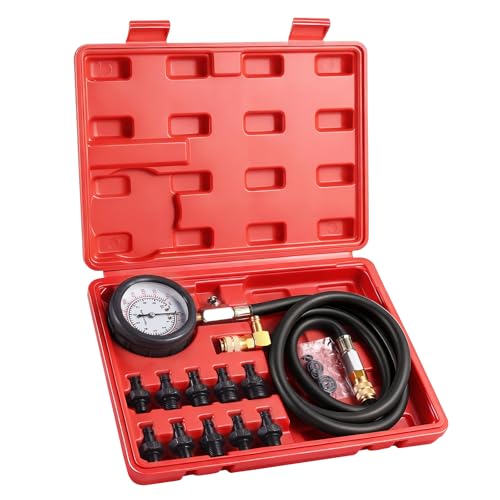
1. Accurate 0–140 PSI Dual-Scale Gauge Features a clear dual-scale pressure gauge (PSI/bar) with a rubber protective cover. Shock-resistant design ensures accurate readings during engine diagnostics.