Wondering where your engine temperature gauge should be? After your engine warms up, the needle should settle near the middle of the dial, usually around 210°F for most cars.
Small fluctuations are normal, but steady deviations can signal trouble. Keep reading to understand what the normal temperature range looks like and how to spot issues.
Where Should Your Temperature Gauge Sit After Warm-Up?
Once your engine is fully warmed up, the temperature gauge should sit near the middle of the range—generally around 210°F for most vehicles. This position indicates the engine has reached its normal operating temperature, which typically falls between 195°F and 220°F. After a few minutes of driving, you’ll notice the needle climbing from cold to this midpoint, then remaining steady. Minor fluctuations are normal, especially in stop-and-go traffic or during hot weather, but if the gauge stays low or creeps toward the hot zone, it signals a potential problem. Regular radiator maintenance and coolant level checks help keep the temperature steady. When selecting a reliable monitoring tool, consider top speedometer picks for your boat adventure to ensure accurate readings on the water. A balanced needle confirms your coolant circulation and thermostat are functioning correctly, ensuring your engine stays within safe operating limits. If you are installing an aftermarket temperature sensor, following a clear wiring guide for connecting the sender unit ensures accurate readings. For marine applications, pairing a reliable gauge with a Livescope+ System can enhance your overall onboard monitoring experience.
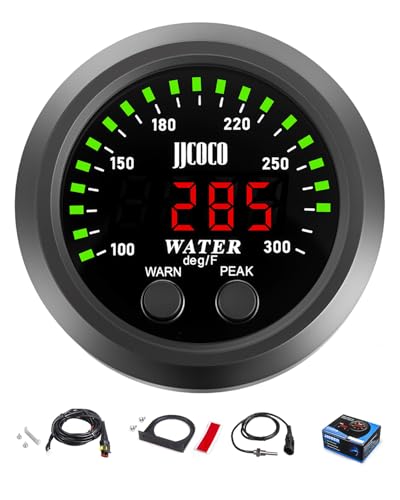
Dual-Alert Temperature Monitoring with Peak Recall: Track critical engine/fluid temps in real-time! Testable temperature range: 32°F to 300°F / 0°C to 150°C.Perfect for diagnosing overheating issues in cars, trucks, boats & RVs. Never miss a dangerous spike – ideal for performance tuning, towing, or off-road adventures. Waterproof design ensures reliability in harsh conditions

Standard 2" white dial for 2-1/16" openings

Protects engine - this must-have engine coolant temperature gauge is designed to provide accurate at-a-glance measurement and monitoring of coolant temperature to help prevent engine overheating
How Hot Should Your Engine Actually Get?
Your engine should typically run between 195°F and 220°F (90°C to 105°C) during normal operation. Most gasoline engines settle around 200°F to 210°F after a proper warm-up. Your cooling system depends on the thermostat to maintain this temperature range. The thermostat begins to open around 180°F to 195°F, allowing coolant to flow and regulate the engine’s temperature. Once warmed, the temperature gauge needle should sit near the middle, indicating steady-state operation.
In hot weather or under heavy load conditions, your engine might briefly reach 230°F without immediate harm. However, sustained temperatures above 220°F increase thermal stress and can cause damage over time. Your engine’s design aims to keep operating within this range to optimize performance, fuel economy, and durability. Always trust your thermostat to manage the cooling cycle, preventing both overheating and overcooling, which could impair engine efficiency. To ensure consistent audio quality and reliable operation, pairing a quality marine stereo with your onboard electronics enhances your boating experience. Many anglers rely on a marine fishfinder to monitor water temperature, providing a valuable secondary check on engine cooling system performance. For accurate monitoring of engine runtime, installing a dedicated hour meter for boat helps track maintenance intervals and overall usage.
When to Panic Over a High Temp Gauge
If your engine’s temperature gauge needle hits the red zone or you see a red temperature warning light, you must stop driving immediately if it’s safe to do so. Continuing to drive risks severe engine damage, including warped components and complete engine failure. Look out for signs like steam, smoke, or boiling sounds coming from under the hood, which indicate coolant is escaping under pressure. A sudden loss of power or rough engine running also signals the engine is overheating internally. If your heater starts blowing cold air while the engine is hot, it likely means you have low coolant levels. Never open the radiator cap while the engine is hot; wait until it cools, then carefully check for leaks or coolant levels. If warning lights or high-temperature readings reappear after topping up the coolant, seek professional repair before continuing to drive, as the underlying issue remains unresolved. For those who enjoy portable electronics for outdoor activities, a portable fish finder can similarly help you monitor critical conditions like water temperature to avoid equipment failure. Using a water pressure gauge on your boat can also help detect cooling system issues before they cause overheating. Similarly, equipping your boat with a night vision camera enhances nighttime navigation safety by helping you spot obstacles or debris that could damage the engine.

【HIGH ACCURACY】: Measurement range is 100-300F(38-150C),Sensor mounting thread: NPT 1/ 8 ",Power: 12V,24V DC, Max. 0.3A.

GlowShift Tinted 7 Color Series Water Temperature Gauge is Designed to Monitor & Display the Coolant Fluid Temperature Running Through Your Car or Truck's Radiator System

【HIGH ACCURACY】: Measurement range is 100-300F(38-150C),Sensor mounting thread: NPT 1/ 8 ",Power: 12V,24V DC, Max. 0.3A.
Is Your Temperature Gauge Stuck on Cold?
If the needle on your temperature gauge stays stuck on cold even after you’ve been driving for a while, it indicates an issue with your vehicle’s cooling system or sensor. A common cause is a thermostat that’s stuck open, preventing your engine from reaching its proper operating temperature. As a result, you may also notice weak cabin heat or decreased fuel efficiency. For anglers who also drive to fishing spots, a reliable temperature sensor can help ensure your vehicle’s engine is working efficiently, much like a fish finder helps new anglers locate fish. Understanding how to interpret sonar display readings can improve your fishing success on the water. However, if you spend time on a boat, pairing a temperature sensor with a top marine amplifier can enhance your overall on-water experience with clear audio. Start by checking your coolant level to ensure it’s adequate. Inspect the coolant temperature sensor connector for signs of corrosion or damage. A malfunctioning sensor is another frequent culprit. Using an OBD scanner can help you identify trouble codes related to the cooling system. Replacing a stuck-open thermostat or a faulty sensor typically resolves the problem. Remember, a cold reading isn’t always just a faulty gauge—it can signal a real cooling system issue.

【Manufacturer Part Number】TX6T、19187359、250791B020、9U2Z12A648A、E0AZ12A648A、E1AZ12A648A、F1AZ12A648B、F2AZ12A648A、F4TZ12A648A、D94Y12A648

Professional, premium aftermarket replacement

GM-recommended replacement part for your GM vehicle’s original factory component
Why Your Temperature Gauge Moves Slightly (And When It’s a Problem)
Small movements in your temperature gauge are often normal, especially during changes in driving conditions. You might notice the needle shift slightly when your cooling fan activates or when you’re driving in stop-and-go traffic, on steep hills, or during heavy acceleration. These fluctuations happen as your thermostat opens and airflow through the radiator varies, temporarily causing the engine temperature to rise or fall. Your engine sensor detects these minor shifts, and as long as the needle quickly returns to its usual resting spot, there’s typically no cause for concern. If you were instead interpreting sonar, you could learn to distinguish fish arches from clutter by comparing their shape and movement patterns. Similarly, when troubleshooting a fuel gauge, you might need to replace the sending unit if it sends inaccurate readings to your dashboard. For accurate diagnostics, comparing your gauge behavior against proper oil pressure guidelines can help clarify whether sensor readings are reliable.
However, if the gauge jumps erratically or repeatedly approaches the red zone, it indicates a potential problem. Causes could include low coolant levels, a sticking thermostat, or a faulty water pump. Faulty engine sensors or wiring issues can also produce false readings, making the gauge appear to fluctuate abnormally. Sudden, large swings in temperature should never be ignored, as they often signal serious issues such as a clogged radiator or head gasket failure. Addressing these abnormal fluctuations promptly can prevent costly engine damage.