If you’re wondering how tall your stern light needs to be on your boat, you’re asking the right questions. The height rules vary depending on your boat’s size, with specific minimums to ensure safety and visibility.
Understanding these details helps you stay compliant and visible on the water. Keep reading to see exactly what you need to know for your boat’s lighting setup.
The 1-Meter Stern Light Height Rule for Boats Under 12 Meters
The “1-meter rule” for boats under 12 meters states that your masthead or all-round white light must be at least 1 meter above your sidelights. This rule does not specify a minimum height for the stern light itself. Instead, it ensures that your front-facing lights are positioned so they are at least 1 meter higher than the sidelights, providing proper vertical separation for visibility and safety. For additional guidance, reviewing top boat switch panels can help you manage all your navigation lights from a single, reliable control point. When selecting your lighting equipment, it is helpful to consult the best fish finders for boats to ensure your electronics fit your vessel’s needs.
Your stern light, which shows a 135° white arc aft, is simply placed at the stern and does not have a height requirement relative to the sidelights. However, it must meet the visibility standard of shining for at least 2 nautical miles.
You have two configuration options: you can use a masthead light plus a stern light and sidelights, or you can use a single all-round white light instead of the masthead and stern lights. If you choose the all-round light, it must still be positioned at least 1 meter higher than your sidelights to comply with the rule. For proper electrical integration, ensure your setup uses a fuel tank sending unit that reliably communicates fuel levels to your boat’s gauge.

Materials: Rugged marine grade, high impact PC enclosure and transparent mirror design, makes this piece a great and luxurious addition to your ship.
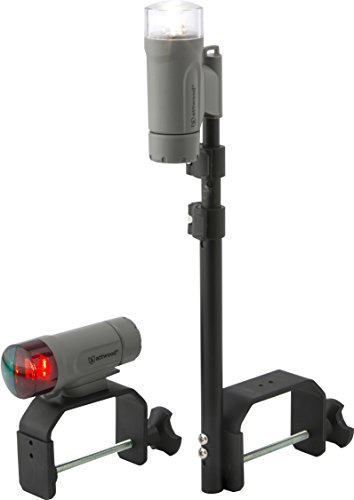
ULTIMATE NIGHTTIME VISIBILITY: Stay safe on small boats or tenders without 12V systems using these compact, high-intensity LED navigation lights
The 2-Meter Stern Light Height Rule for Boats Over 12 Meters
For boats over 12 meters, the focus shifts from a 1-meter separation rule to a requirement that your sternlight is visible for at least 2 nautical miles. This means the key measurement isn’t strictly about mounting height but ensuring the light’s range meets this visibility standard. You need to verify that your white sternlight, installed as close to the stern as practicable, can be seen from 2 nautical miles away regardless of your vessel’s type. LED technology is often recommended because it can reliably achieve the necessary range with less power consumption and consistent brightness. The sternlight must cast an unbroken 135-degree arc, centered 67.5 degrees on each side from directly astern, to properly indicate your vessel’s position and direction. Many anglers pair a reliable sternlight with a quality ice fishing sonar to stay visible while navigating to their spot. Remember, this requirement is different from the 2.5-meter masthead light height applicable to boats between 12 and 20 meters, which relates to the mounting height for visibility at closer distances. For compliance, always check that your sternlight’s visibility range, arc, and placement relative to your sidelights and masthead light meet the regulations. A reliable boat compass can also help you maintain a steady course when verifying your navigation light alignment. Proper transducer placement also affects how the sonar reads depth and structure, though it is unrelated to navigation light rules.

Pactrade Marine Stern LED Navigation Lights are made prefect for powerboats and sailboats up to 39'4'' ( 12meters ) in length. Molded from impact and resistant polycarbonate. White Housing is non-corrosive, non-magnetic and seawater resistant


Designed for installation on wakeboard tower, radar arch, hard top, poling platform, tuna tower or other fixed structure
How the 135-Degree Arc Changes Your Height Decision
The 135-degree arc determines your stern light’s optimal mounting height. Since the arc requires the light to be visible exactly 67.5 degrees on each side of dead astern, you cannot mount it arbitrarily. Raising the light increases its visibility over the stern, but you must also ensure the beam angle remains within the sector—tilting too far up or down could break compliance. Your height choice must keep the beam level enough to produce a clean, unbroken white across the entire aft arc. Mounting it too high may cause the beam to skip over the water behind your vessel, reducing visible range. Conversely, mounting it too low risks obstruction by the transom. Every adjustment in height is a trade-off between ensuring the light stays within the required sector and maintaining a clear, consistent display backward. For reliable positioning, you can follow the same transducer installation guidance used to mount a trolling motor sensor at a clean, obstruction-free angle. To further optimize your setup, consider comparing the best anchor light options designed specifically for sailboat compliance. These boat owners should also consider that marine speakers are built to withstand harsh moisture and UV exposure, ensuring longevity even when mounted near the waterline.
Check Stern Light Height Against Common Blockages
Check your stern light height against common blockages to ensure a clear 135-degree arc. Confirm the light does not cast shadows from your outboard motor, swim ladder, transom accessories, folded biminis, canvas tops, or antenna mounts. These items can create visual obstructions that hide the beam when deployed, compromising safety. For aluminum boats, selecting a mount with adjustable height can help you raise the light above typical transom obstacles like a trolling motor bracket. Some anglers find that a raised light can also help avoid confusion with fish arches that appear as clutter on a fishfinder screen. Understanding how a pitot tube measures water speed can inform decisions on mounting electronics clear of wake turbulence.
Stand directly astern with all normal gear in place, including loaded equipment and temporary items like trolling bags. Inspect deck fittings and railings from this vantage point. The goal is to verify the light remains unobstructed across its full arc during actual operation. If any blockage exists, adjust the height or reposition components so the beam remains clear. A hidden obstruction could cause a shadow at night, increasing the risk of accidents or misidentification by other vessels.

Molded One Piece White Body Construction

Country Of Origin : China

VERSATILE DESIGN:Visibility 2NM,360-degree LED navigation light perfect for boats, yachts, and pontoons, providing all-round visibility for safe nighttime operation
Match Stern Light Height to Your Sidelight Setup
To match your stern light height to your sidelight setup, position the stern light on the aft centerline of your vessel so that its 135-degree white arc remains symmetrical. Keep the stern light level with or slightly lower than the sidelight plane, typically following masthead light rules—at least 1 meter below on vessels under 20 meters. This alignment ensures the 135-degree arc aligns properly with the red and green side sectors, maintaining clear visibility zones and avoiding sector overlap. Use LED technology for consistent intensity and uniform light color, which helps prevent the boundaries between sectors from blurring. For accurate positioning, pairing your light with a quality chartplotter can help verify sector boundaries on the navigation display. When choosing a stern light, anglers might look for fish finder reviews that emphasize sector clarity and precision. Mounting the stern light at the proper height and location ensures a coherent, rule-compliant navigation display, matching the overall sidelight arrangement for a safe and unmistakable signaling system. For a similar approach to selecting gear, consider top fish finders that specialize in clear sector displays.

Enhances safe operation from sunset to sunrise or anytime there’s poor visibility

1-Inch Tube Mounting: This pontoon anchor light is designed for bimini tops mounting on 1-Inch round/square tubes with included brackets; the versatile base also accommodates flat surfaces for flexible installation on any boats

Specification: Operating Voltage - DC 12V; Power - 3.5W; Color Temperature - White 6000K; Adjustable Length - 27-48 Inches; Light Angle - 360 Degree; Total Leds - 63 SMD LEDs; Visible Distance - 3NM; Long Lifespan - 50,000 Hours
Mounting on Tiny Transoms and Narrow Sterns
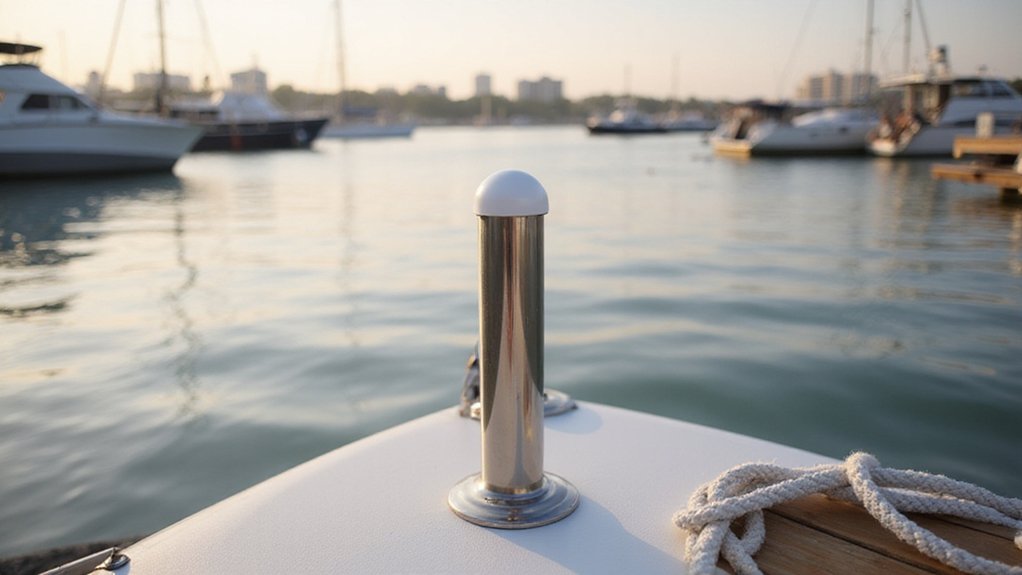
Mounting a stern light on a tiny transom or narrow stern requires careful placement to ensure visibility and compliance. The key is to keep the 135-degree white arc of the light unobstructed, focusing less on a specific height and more on practical mounting. A centerline mount often works best to keep the light at a consistent level and ensure it shines clearly. If outboard motors, swim platforms, or other clutter block the light, you can raise the fixture with a short pole or opt for a flush-mounted design to keep it streamlined. Understanding the most likely causes of a gauge failure can help identify if a faulty gauge or sender is the real issue. For example, a pitot tube can fail due to blockage just like an electrical sender. To avoid this, always ensure the pitot tube is free of debris, since even a small blockage can lead to inaccurate speed readings. Always verify that the stern light’s color and visibility meet regulations—white light with a minimum of 2 nautical miles of visibility. For narrow sterns, solar-powered models are a good choice to avoid wiring complications, but check that they don’t block the required light arc. On very short transoms, an all-round white light can be an effective solution, provided its position clears all potential obstructions and maintains the necessary sightline.

Our flush-mount rectangular stainless steel 2nm LED stern light comes prefitted with our LED festoon bulb.

3 inch Diameter; 12 V DC; 6-2835-SMD; Mount directly to a surface and stand out about 1/2";Come with the mounting screws you need, easy to install

Included Components: End Product & Information
Real-World Examples: Stern Light Height on Bass Boats vs. Sailboats
On a sailboat, your stern light must be mounted low enough to clear mast rigging yet high enough to be visible past a dinghy or bimini top. You typically attach it on the transom or stern pulpit to ensure nothing blocks the 135-degree light sweep. The main consideration is practical placement: on a sailboat, the fixture needs to withstand spray and weather elements, so corrosion-resistant, waterproof designs are essential. While the height is limited by rigging and deck structures, visibility past obstacles takes priority over aesthetics, ensuring other vessels see your light clearly even in rough conditions. Just as with a horn relay, securing a reliable electrical connection prevents intermittent failures that could leave your navigation light dark in critical moments. Federal regulations require that the stern light be visible for two nautical miles, which directly influences your mounting height choices.
Final Checklist: Confirm Your Stern Light Height Before Night Running
Before heading out after dark, run through a final stern-light-height checklist to ensure your setup complies with visibility and legal standards. Confirm your light is mounted as close as possible to the stern and above any obstructions like gear or seats. Ensure the light is unobstructed, displaying a 135-degree arc centered aft, and visible at 2 nautical miles according to marine regulations. Check that the lens is clean, the bulb is white, and the mounting angle is level—not tilted. Combine your stern light with sidelights to form the correct 360-degree light pattern for safety compliance. Remember, there is no universal height; verify that your specific vessel’s arrangement aligns with its size and layout. Before setting out, perform a dockside light test to identify issues like blocked arcs or misidentified lights, preventing common mistakes during night running.