Ever wonder what color your boat’s stern light should be? It’s a common question for boat owners wanting to stay within the rules and stay visible.
The answer is straightforward: your stern light must always be white, signaling your vessel’s rear.
Proper placement and testing are key to making sure others can see you clearly and safely.
Keep reading to learn all the details.
Are Boat Stern Lights Always White? (Yes, Here’s Why)
Your stern light must always be white. This is a strict international regulation designed to clearly identify the rear of your vessel. It shows a 135-degree arc behind you, ensuring other boaters can easily see your position and heading at night. While your boat’s sidelights are red and green to indicate port and starboard sides, the stern light is solely white. Even if your boat uses a single all-around white light—common on smaller vessels—that light still functions as the stern light under the rules. The white color is not optional; it is a mandatory signal for safe navigation, helping others determine your direction and avoid collisions. For example, just as you must learn to identify fish arches on a fishfinder screen to avoid clutter, you must learn to identify the correct white stern light to avoid nighttime collisions. Whether using a dedicated stern light or a combined all-around white light, knowing how to interpret marine navigation lights on the water is as critical as understanding how to read sonar returns when targeting catfish. When choosing a lighting setup, a top fish finder for boats can help you spot hazards at night by integrating with your navigation system.
Where Should You Mount Your Stern Light?
Mount your stern light as close to the stern as possible, typically on a vertical surface facing aft. Many hulls require the fixture to be centered on the transom to minimize visibility obstruction. Check your specific light’s design—some might need installation on a horizontal surface instead. Position the light high enough to stay clear of obstructions like outboard motors, swim platforms, or davits. If waves cause the light to be blocked, raise it to maintain visibility. A fish finder, which uses sonar technology to detect underwater objects, can help you confirm your boat’s positioning for optimal light placement. For guidance on selecting reliable marine electronics, you can review the best speedometer for boat options that also enhance navigation safety. Ensure the light displays a white light over 135 degrees aft, as required by navigation rules. While exact centerline placement isn’t strictly required by regulations, manufacturers often recommend it for optimal performance. The final position should be on a secure, level surface that keeps the light aimed aft and free from obstructions.

Pre-Wired 2-Minute Installation: Includes color-coded wires and stainless screws for direct mounting into standard 1.25-inch boat holes, hassle-free setup without requiring tools
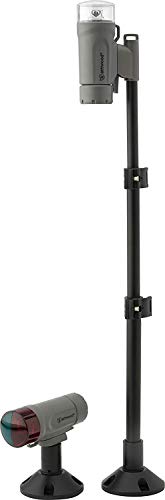
ULTIMATE NIGHTTIME VISIBILITY: Stay safe on small boats or tenders without 12V systems using these compact, high-intensity LED navigation lights
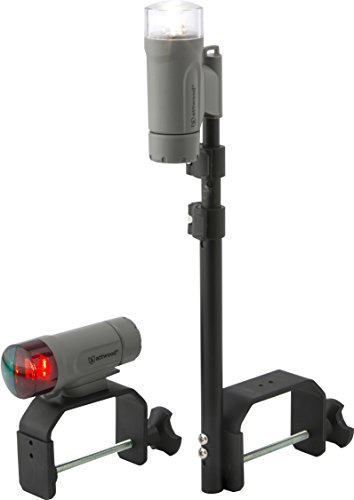
ULTIMATE NIGHTTIME VISIBILITY: Stay safe on small boats or tenders without 12V systems using these compact, high-intensity LED navigation lights
What Does a Stern Light’s 135-Degree Arc Actually Mean?
Because the stern light’s arc covers exactly 135 degrees, it allows you to see the vessel from dead astern out to approximately 67.5 degrees on each side. This means you’re marking the rear hemisphere without spilling into the forward visibility zone. The white, fixed beam ensures that other vessels following you can identify your heading accurately, aiding collision avoidance during night navigation. It’s important to place the light as close to the stern as possible so its centered sector remains true. The arc stops where sidelights take over, preventing confusion about your vessel’s orientation. Keep in mind, the 67.5-degree left and right sectors from dead astern create a legal minimum visibility zone of at least 2 nautical miles. To maintain clear signaling, avoid blocking this arc with gear or fittings, which could obscure your vessel’s rear boundary at night. Similar to mounting a gauge, the stern light must be installed precisely to maintain the correct centered arc, much like how a technician checks the wiring of a boat tachometer to ensure accurate readings and avoid failure. Understanding the stern light’s function is enhanced by knowing that anchor lights are typically white and visible from all around, serving a different purpose for stationary vessels.
How to Avoid 3 Mistakes That Block Your Stern Light’s Arc
Mount your stern light so that it is positioned as high as possible on the transom, ideally just below the top edge. Keeping the fixture elevated ensures a minimum 135-degree arc of visibility that’s critical for navigation rules. When the light is mounted too low, hull structures, the motor, or deck fittings can intrude into the beam’s path, effectively blocking part of the required arc. To fix this, use shims or spacers to elevate the fixture onto a vertical surface, making sure the beam stays centered aft and remains free of obstructions. For the best performance, choose a top marine VHF antenna that won’t interfere with your stern light’s arc when mounted nearby. For anglers who want the clearest underwater view, selecting a unit with live sonar like the Lowrance Eagle Eye 9 can help you see structure that might otherwise block your light’s arc. A high-quality marine sound bar can also be mounted on the transom without compromising your light’s visibility if positioned away from the beam’s path.
Ensure the stern light is on the centerline of your boat and not recessed into the transom. Off-center placement or recessing can cause the transom itself to cut into the beam, reducing visibility angles. Keep the fixture proud of the hull, directly on the centerline, and check under conditions that mimic normal use—especially when heavily loaded or when gear like davits, antennas, or T-tops are deployed. Structural gear can block the beam when trimmed or loaded differently, so verification under typical conditions is essential.
Finally, do not angle the fixture or cover it with tape or bags. Angling distorts the light pattern, making it less effective and potentially non-compliant. Covering the light with tape or bags or obstructing it in any way directly violates Marine signaling regulations. Always recheck your light’s arc after loading your boat or deploying gear, since what looks good at the dock might not be visible enough underway. Properly mounted, unobstructed, and correctly aimed lights keep you compliant with regulations and ensure you remain visible to others in all conditions.

Country Of Origin : China
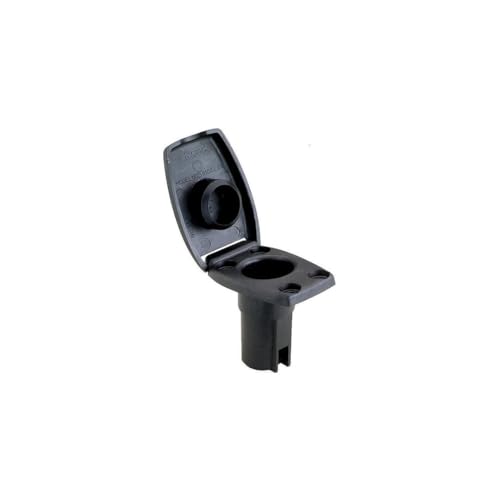
2-Pin pole base requires 1-3/8" installation hole

UNIVERSAL COMPATIBILITY: Engineered specifically for 12-degree angled poles; perfectly fits Frosted Globe 5110, Anti-Glare 5300, and Bi-Color 5091 series pole lights.
How Far Must Your Stern Light Be Visible?
Your stern light must be visible for at least 2 nautical miles if your vessel is under 50 meters long. This visibility range ensures that other vessels can see your stern light from a safe distance during nighttime navigation, helping to prevent collisions. For vessels 50 meters or longer, the required visible distance increases to 3 nautical miles. For those shopping online, comparing top boat navigation lights can help you select a model that meets these visibility standards. When choosing a light, consider wireless depth finder features that enhance safety and navigation. If your boat is an aluminum model, a secure mounting system is especially important to keep the light stable.
The white stern light should cover a 135-degree arc, which means it must project an unbroken beam across 67.5 degrees on each side. Meeting both the range and arc requirements is essential for compliance. It is important to confirm your light’s manufacturer rating, as most 2 NM lights are suitable for vessels up to 50 meters. Always test your stern light under standard night conditions to ensure it remains effective, avoiding citations or navigational hazards.

[ SPECIFICATIONS ]: Model: SFNL011-SB-02 | Voltage: 12V DC | Power: 1W | Visibility: 2 Nautical Miles | Waterproof Grade: IP67 | Level Arc: 135° | Color: White

Materials: Rugged marine grade, high impact PC enclosure and transparent mirror design, makes this piece a great and luxurious addition to your ship.

Premium Boat Lights: 24-Inch UV-resistant boat light delivers 360-degree visibility, featuring an IP65 splashproof design
How to Test Your Stern Light’s Visibility at Night
To verify your stern light’s visibility at night, perform a visual check in complete darkness and ensure nearby dock or deck lights are turned off or shielded so they don’t interfere with the test. Begin by viewing the light directly from behind, confirming that it displays a steady, centered white beam without flickering. This ensures the bulb or LED is functioning properly and not damaged.
Next, assess the coverage of the light’s arc by moving to each quarter of the stern; the light must be visible over the entire 135-degree arc without shadowing from gear or inflatable tubes. A shoreline or distant vantage point provides an honest perspective of its visibility from afar. Examine the lens carefully for haze, salt deposits, or water intrusion, all of which can reduce brightness. Clean the lens thoroughly if necessary, and confirm that the bulb or LED emits full, consistent brightness. For a comparable level of quality and performance, ensure your boat’s navigation lights are as reliable as the best fish finders on the market. This is especially important because the all-round white light must be placed higher than the stern light to avoid obstructing its visibility from certain angles. Performing a marine VHF radio check can similarly confirm that your communication equipment transmits and receives with full reliability before you head out.
Avoid mistaking this light for outdoor lighting or neon-colored signals; it needs to be pure white and visible without any interruptions or color distortions. Recheck the light after replacing bulbs or performing electrical work to ensure it remains properly visible before heading out on the water.
What a White Stern Light Tells You About Boat Heading
When you see only a white stern light, it indicates the vessel is moving away from you, with its bow pointing directly away. This typically signifies an overtaking situation where you are the give-way vessel and must keep clear. The white stern light covers a 135-degree arc centered on dead astern, meaning you can confidently conclude the boat is moving away or nearly so. Properly functioning fuel tank sending units are essential for maintaining accurate fuel levels during extended navigation at night.
The consistent color of the light—white—contains important information. Unlike red or green sidelights, the white stern light shows that the vessel does not have a crossing or head-on course. Its placement and color help you determine whether you’re overtaking, approaching from behind, or in a situation that requires extra caution. If you are uncertain, default to treating the vessel as overtaking and take action to avoid a collision. A depth finder can help you confirm your boat’s position relative to other vessels in low-visibility conditions.
Power vs. Sail: Do Stern Light Rules Change?
The stern light rule remains the same regardless of vessel type: it must always be a white light shining aft through a 135-degree arc. Lighting color regulations do not change whether you are operating a powerboat or a sailboat—the stern light remains white in both cases. However, your vessel’s class affects the complete light package you are required to display. Under power, you need to show sidelights, a masthead light, and the white stern light. Sailboats under sail can use a tricolor masthead light on smaller vessels, but the stern light’s color and arc stay consistent. When sailing under power, you switch to the powerboat lighting requirements, which means losing some sailing-specific exemptions. Vessel size also plays a role: boats under 12 meters (about 39 feet) may have combined lights, but the stern light’s color and the 135-degree visibility arc never change. Ultimately, the stern light’s function and placement remain the same, no matter how you’re moving through the water.
Do You Need a Masthead Light in Addition to Your Stern Light?
Yes, you do need a masthead light in addition to your stern light when operating a power-driven vessel that is 12 meters (approximately 39.4 feet) or longer. The stern light covers only a 135-degree arc aft, whereas the masthead light spans 225 degrees forward. Together, these lights create the complete underway light pattern required for legal compliance. You cannot substitute one for the other because they serve different directions and aren’t interchangeable.
For proper installation, the masthead light should be mounted over the centerline forward of the vessel, and the stern light near the stern. If your vessel measures 12 meters or longer, a separate masthead light is mandatory; shorter boats may use a combined all-round white light instead. Operating without the masthead light means you aren’t accurately indicating your vessel’s heading or status, which can lead to violations. Always verify local lighting requirements, but typically, you should keep the masthead light unless you fall under the small-boat exception.

Reliable illumination to ensure boat is highly visible on the water

【Very Bright 】Masthead light are equipped with 12 pieces LEDs and 55 lumes, Deck light are equipped with 6 pieces LEDs and 420 lumes. Super brightness is perfect for your specified areas.

This deck and masthead light is easy to install. It is molded in strong, corrosion resistant Plastic. For Boats Up To 12 M (39')
Stern Light Tips for Nighttime Overtaking and Collision Avoidance
If you see only a white light ahead at night, it indicates the stern light of another vessel, signaling an overtaking situation. As the give-way vessel, you must keep clear and take early action. Use this white light as a cue to decide your passing side promptly, since the stand-on vessel should maintain its course. According to lighting regulations, a white stern light means you are approaching from more than 22.5 degrees abaft the beam. Do not initiate any ship maneuvers based solely on guesswork—if sidelights are not visible, treat the situation as overtaking. If you’re unsure, it’s safer to proceed as if overtaking, reducing the chance of close-quarters collision. Remember, the stern light confirms the encounter type but doesn’t grant permission to pass; it’s a signal that you need to act early and decisively to avoid hazards. Overtaking rules remain in effect until you are fully past and clear, even if course angles shift during the maneuver.

Molded One Piece White Body Construction

Translucent White Plastic, Anti-Glare Screw On Globe For New Style Attwood Model All-Round Navigation Lights

Meets USCG requirement: 3NM