Ever wonder why your car might stall or gauge readings seem off? The difference between a faulty fuel pump and a bad sending unit can be subtle but crucial.
While the pump pushes fuel to your engine, the sending unit measures how much fuel is left. Knowing how to tell them apart can save you time and help you troubleshoot more effectively.
The details are just below.
Fuel Pump vs. Sending Unit: What’s the Difference?
Fuel Pump vs. Sending Unit: What’s the Difference?
A fuel pump and a sending unit have distinct roles, even though they are both located inside your fuel tank. The fuel pump’s job is to push fuel from the tank to your engine, ensuring a steady, pressurized flow necessary for combustion. A healthy pump directly impacts your vehicle’s fuel efficiency, as it delivers fuel in the right amount and pressure for optimal engine performance. When the pump fails, you might experience stalling, loss of power, or difficulty starting, since fuel can’t reach the engine properly. When choosing replacement parts, it is helpful to consider the same technology used in top fish finders for boats, which compare performance features to ensure you select the best option. For marine applications, selecting a reliable VHF marine radio can be compared to choosing a fuel pump that delivers consistent performance under demanding conditions. Similarly, a clear view of fuel system health depends on understanding which component is failing, much like relying on best marine binoculars for clear viewing on the water. In contrast, the sending unit only measures how much fuel is in the tank. It uses a float attached to a resistor to track the level and sends that information to your fuel gauge. If your gauge reads empty when there’s still fuel, or full when you’re nearly empty, the sending unit could be faulty. It doesn’t affect the engine’s ability to run but can cause confusion about how much fuel you actually have. Correctly diagnosing whether your issue stems from a failing fuel pump or a defective sending unit is key to fixing the problem efficiently.
Why the Fuel Pump Is Critical for Starting Your Engine
The fuel pump is essential for starting your engine because it creates the necessary pressurized fuel flow. When you turn the key, the electric fuel pump runs for a few seconds to build line pressure, filling filters, lines, and injectors before you even crank. This priming cycle pushes air out of the system and ensures liquid fuel reaches the injector rail, enabling a smooth startup. In older vehicles with a mechanical fuel pump, a loss of prime often occurs after the vehicle sits idle due to fuel evaporation, creating air pockets that must be cleared. For a reliable fishing trip, using a portable fish finder can help you locate prime fishing spots quickly. For boaters, ensuring your navigation lights are visible is equally important, and selecting top anchor lights can improve safety on the water.
If the fuel pump is weak or fails, starting becomes difficult or impossible. You might experience hard starting symptoms, which can drain your battery and strain your starter. Reliable ignition depends on the pump restoring prime after maintenance or disruptions in the fuel system. You can often hear the pump prime—use this sound as a quick check of its health. If it’s silent, you’re likely stuck, and the engine won’t start without proper fuel pressure. Properly securing the pump’s power and ground connections ensures consistent voltage delivery for reliable operation.
Prioritizing the fuel pump’s function is crucial for optimal engine performance. Without sufficient pressure, your engine remains dead on the key, making the pump’s role in building and maintaining fuel pressure indispensable for quick, reliable starts.
How the Sending Unit Determines Your Fuel Gauge Reading
The sending unit determines your fuel gauge reading by converting the position of a float into an electrical resistance signal. A float on the fuel surface is connected to a pivoting metal arm that moves as fuel levels change. This arm contacts a resistive strip, changing the electrical resistance in relation to the float’s position. When fuel is high, resistance decreases, allowing more current to flow to the gauge. When fuel is low, resistance increases, reducing current flow. The gauge interprets these resistance variations to display an approximate fuel level. A binnacle compass similarly relies on precise calibration to ensure accurate readings aboard a boat. Since it only reads the sender’s position, not actual fuel volume, any issues with the sending unit—like a worn float, corroded track, or broken circuit—can lead to inaccurate or fluctuating readings. Resistance values such as 33 ohms to 240 ohms are typical and calibrated to match the gauge’s design. Correct pairing ensures accurate fuel level readings because matching resistance ranges between the gauge and sender is essential. Using a fish finder requires similar attention to interpreting screen readouts for accurate results on the water. A fish finder relies on transducer sonar pulses to map underwater structures and locate fish, just as the sender relies on resistance signals.
Where the Pump and Sending Unit Are Located
Vehicle-specific placement is key. Depending on your make and model, the sending unit can sit on the side of the tank, near the rear wall, or beneath other interior components, not just the top. Some assemblies require removing a top-mounted retaining ring, while others hide the access under cargo trim or inside the trunk. Always consult your service manual to locate the exact spot before starting. Doing so saves you time, reduces frustration, and prevents unnecessary disassembly. For offshore marine applications, a reliable boat compass is equally critical for navigation when electronic systems fail. The fuel pump assembly is enclosed within a case inside the gas tank and includes the fuel sending unit and filter sock. For anglers who also fish from boats, selecting a best fish finder significantly improves catching success by clearly locating underwater structures and schools. Users researching navigation equipment often compare GPS quality and performance to ensure reliability in remote areas.
How to Diagnose a Fuel Pump Problem vs. a Sending Unit Problem
To diagnose whether a problem lies with the fuel pump or the sending unit, start by testing fuel pressure at the fuel rail with a gauge. If pressure is low, it indicates a likely issue with the pump, relay, or fuel filter. For the sending unit, measure resistance as you move the float arm; infinite resistance or erratic readings suggest the sending unit has failed. You can also perform a gauge sweep test by shorting the sender signal circuit. If the gauge jumps to full, your wiring is probably intact, and the issue is with the sending unit itself. The sending unit contains a variable resistor card that changes resistance with float position, directly affecting the gauge reading. Keep in mind that a failing fuel pump affects engine performance, such as difficulty starting or poor acceleration, while a faulty sending unit only impacts the fuel level reading on the dashboard. A multimeter set to ohms is essential for testing the resistance range across the sender terminals. Additionally, the sender’s ground connection must be clean and secure to avoid false readings or intermittent gauge behavior. A similar process of checking for corrupted software files can be applied when updating the unit’s firmware to avoid a failed install.
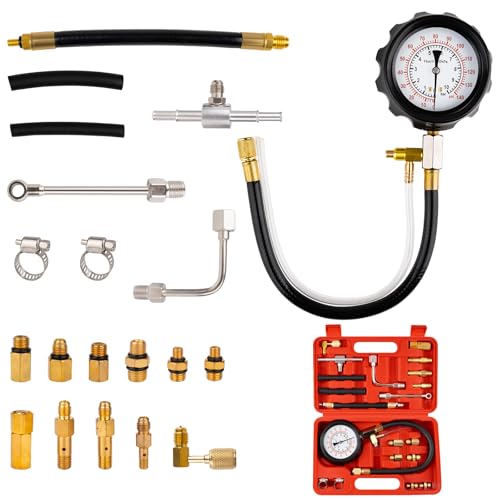
Compatibility Note: For further confirmation of specific model compatibility, refer to the vehicle owner's manual or contact a professional technician. Excludes Fo/rd, K/I/A, Bo/s/ch, C/I/S Je/tro/nic, G//M Th/rot/tle Bo/dy Systems, A/cu/ra, J/ee/p, B/M/W, Ni/s/san, and To/yo/ta fuel systems. Not compatible with small/non/standard S/chra/der vallves, high/pre/ssure direct in/ject/ed engines, or die//sel injection pumps. Verify your vehicle’s vallve size and pressure specs before purchase
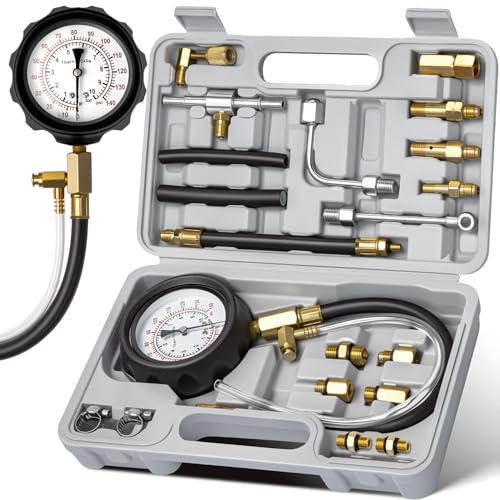
ACCURATE DUAL-SCALE GAUGE: Features a shock-resistant dry gauge with built-in damping mechanism, providing clear 0–140 PSI and 0–10 BAR dual scales for precise fuel system diagnostics

Universal Design: The included adapters, hoses and fittings cover most fuel injection systems and Gas Engine Cars, Motorcycles, Trucks, SUVs, ATVs, UTVs, RVs. (Does not compatible with Bosch, CIS Jetronic, TB System on GM vehicles, 2012 Dodge 5.7L, 1999 GNMC Sonoma 4.3). Please verify your vehicle's vallve size and pressure specs before purchase
3 Signs Your Fuel Pump Is Failing
Your fuel pump is failing if the engine struggles to start and requires extended cranking, especially on warm restarts. This occurs because the pump cannot build enough fuel pressure quickly enough, regardless of the fuel filter’s condition. As the pump weakens, it becomes less capable of delivering the necessary fuel for reliable ignition. This is similar to why marine speakers must reliably perform under demanding conditions to maintain consistent output. Just as a marine GPS provides critical navigation data to prevent getting lost at sea, a properly functioning fuel pump ensures your engine gets the fuel it needs to start.
You may also notice the engine sputtering, hesitation, or surging at highway speeds. The engine jerks under steady throttle due to inconsistent fuel flow, and these symptoms tend to worsen under load, such as during acceleration or climbing hills. When you experience a sudden power loss in these situations, it’s a sign the pump cannot keep up with the fuel demand. This is different from electrical issues directly from a bad sending unit; it indicates that the pump itself is physically failing to deliver enough fuel to power your vehicle efficiently.

【Specification】Inline Fuel Pump, Output Pressure : 2.5-4 psi, Voltage : 12 Volt, Flow Rate : 30 GPH, Hose Size : 8 mm ( 5/16 inch )

OEM number: 491922 691034 692313 808492 808656

Application reference: Injector Pump Repair Kit For Case For IH 430 530 470 570 580CK 480C 480B 580C 580B.
3 Signs Your Fuel Sending Unit Is Failing
Your fuel gauge can behave erratically when the fuel sending unit starts to fail. This typically manifests as the needle jumping up and down while you’re driving, especially over bumps. Such intermittent movement indicates a worn sensor track inside the sending unit that isn’t making consistent electrical contact. Because this issue stems from a damaged sensor, it won’t improve on its own and usually requires proper calibration or replacement of the sensor to restore accurate readings. Similarly, faulty wiring can cause erratic performance, much like how boat navigation lights may flicker or malfunction due to poor connections.

[Part Number] 944300W000, 944600W000

Great marine fuel tank sending unit replacement for broken marine fuel sending unit in marine boat fuel tank.

Replacement installs on float arm of the fuel sending unit
Can You Replace Just One of These Parts?
Whether you can replace just the fuel pump or the sending unit depends entirely on your vehicle’s design. Many vehicles feature modular setups that allow you to swap one component without replacing the other. For example, if your fuel pump still provides proper fuel pressure, you might only need to replace the sending unit. Conversely, integrated modules typically require you to replace the entire assembly, which includes the fuel filter, strainer, and regulator in one unit. For those monitoring oil pressure separately, using a mechanical gauge can provide more direct and accurate readings than relying on an electrical sending unit. Modern navigation tools often rely on chartplotter performance to ensure accurate data display in demanding conditions.
Before proceeding, check your wiring harness and confirm part compatibility with your vehicle’s service manual. Replacing only one part makes sense if the other component remains functional and reliable. However, opting for a full module replacement can save you from having to repeat labor later if the remaining original part fails. Always relieve fuel pressure before starting work and ensure your workspace stays clean to avoid safety hazards.

Aftermarket Fuel Sender Gasket, 2 Pcs
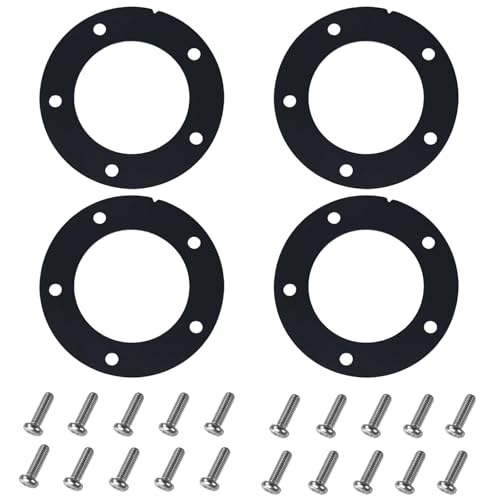
4-Pack Replacement Kit:The package includes 4 pieces of the fuel tank sending unit gasket. This four-pack provides a convenient solution for maintenance needs or for having a spare fuel pump gasket and boat gas tank cap gasket on hand

[Vehicle Fitment]: Compatible with Ram 2500 Pickup 2011-2018 L6 6.7L Diesel, Ram 3500 Pickup 2011-2018 L6 6.7L Diesel (Except Cab & Chassis)