Ever wonder how a boat’s speedometer tells you how fast you’re going? It’s not measuring ground speed but rather how quickly water moves past the hull.
This simple device uses water pressure or electrical signals from a paddlewheel or pitot tube to give you a clear speed reading.
Keep reading to see how different methods and even GPS can change your navigation experience.
How Does a Boat Speedometer Actually Work?
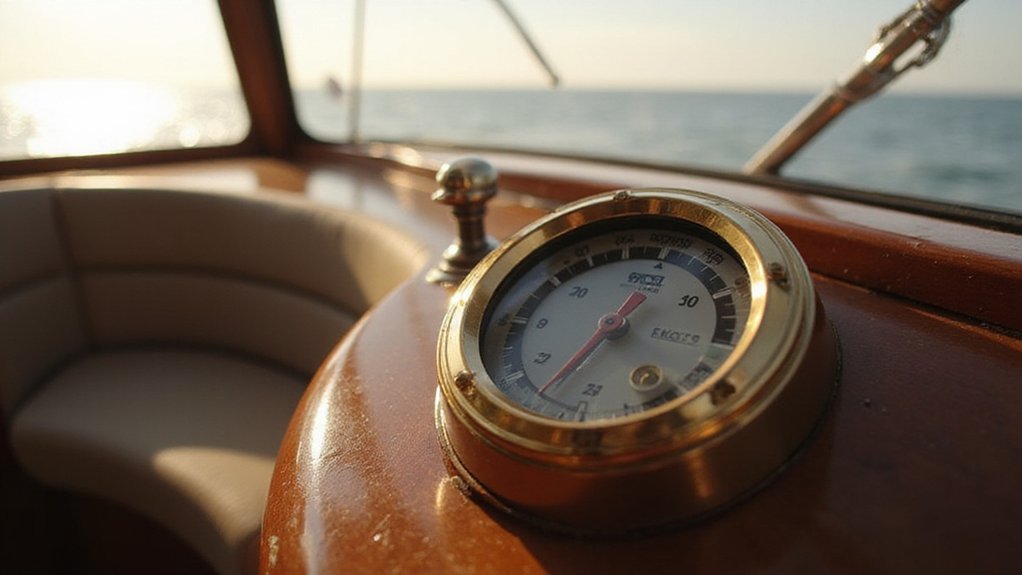
A boat speedometer works by measuring how fast your boat moves through the water using a sensor such as a pitot tube, paddlewheel, or electronic unit. The sensor detects water movement relative to your boat and sends signals—either pulses or pressure data—to a display. This display then converts these signals into a numerical speed reading. The type of sensor chosen depends on your boat’s material and engine type. For instance, a metal hull may require different mounting methods than fiberglass, and a slow outboard engine might be best paired with a paddlewheel. To mount a sensor effectively on a metal hull, you should review transducer installation tips recommended for different hull materials. It’s important to note that this system measures water speed, not ground speed. Understanding the transducer basics is also helpful, as fish finder transducers use similar sonar principles to detect underwater objects and water depth. If currents are strong, they can influence the reading, making your boat seem faster or slower than actual over ground, unlike GPS-based systems that measure speed over ground. For boaters seeking top performance, models like the Garmin EchoMap UHD 93SV offer advanced sonar capabilities that integrate seamlessly with compatible speed sensors.
How Your Boat’s Motion Creates a Pressure Reading
Your boat’s motion creates a pressure reading because dynamic pressure depends on the square of your speed. As you move faster through the water, the resistance you encounter compresses the water more tightly, increasing the pressure at your hull’s sensing point. This pressure field is generated directly from your boat’s movement through water, not from ground speed or engine power. Essentially, you’re measuring how much the water pushes back against your hull, converting that resistance into a pressure signal. This pressure reading forms the basis of your speedometer’s raw input, making it a precise indicator of your true speed through the water. For a durable and accurate reading, consider mechanical oil pressure gauges that use a similar principle of direct pressure measurement. When choosing equipment, look for pitot tube designs that offer reliable performance across different water conditions. Some anglers pair this speed data with top fish finders for boats to cross-reference water conditions and improve their fishing strategy.
How the Pitot Tube Converts Water Pressure Into Speed
The pitot tube converts water pressure into speed by measuring the dynamic pressure caused by water flow as your boat moves forward. When the boat advances, water is forced into the tube’s opening, creating a pressure inside the line that is higher than static pressure. This pressure comprises both static and dynamic components, with the dynamic part directly related to your boat’s speed.
Inside the tube, this captured pressure travels through connecting hoses to a gauge or pressure chamber. In mechanical systems, the pressure acts on a diaphragm or linkage that moves a needle. Unlike typical pressure readings, the gauge is calibrated in actual speed units like miles per hour or knots, not pounds per square inch. As your boat speeds up, the water pressure increases, causing the needle to swing farther, giving you a real-time speed readout linked to the water flow beneath your hull. If the pitot tube becomes blocked, however, it can no longer accurately measure dynamic pressure, leading to erratic speed readings or a complete loss of the speedometer function. The relationship between pressure and speed follows the squared-velocity law. For instance, 5 PSI of pressure might correspond to about 20 MPH, while 30 PSI could equal roughly 50 MPH. The gauge translates the measured pressure into a direct speed indication, helping you monitor your watercraft’s velocity instantly based on the dynamic water pressure at the pitot tube opening. For anglers who also rely on advanced electronics, understanding this principle is similar to how a fish finder with camera uses sonar and visual data to locate underwater targets. A properly calibrated pitot system depends on clear water flow to avoid the same blockage issues that can disrupt a sonar transducer’s signal.

Universal Pitot Tube replacement for any brands.

Reliable Quality - Made of high-quality materials, provide accurate degrees, stable quality, and long service life

Universal Pitot Tube replacement for any brands.
Why Air in the Hose Affects Your Reading Accuracy
Air bubbles in the hose can significantly impact your reading accuracy. Since air, not water, carries the pressure changes, trapped bubbles cushion sudden pressure shifts, causing your gauge to lag during quick acceleration. This results in sluggish needle reactions and underestimates of actual speed. The bubbles absorb pressure pulses, softening the signal and delaying the gauge’s response, making it harder to trust your readings during fast traffic changes. Additionally, the speedometer’s function is based on measuring water pressure through an aperture on the gearbox, which is a common source of blockage.
Kinks in the hose worsen this problem by obstructing airflow and trapping bubbles in isolated sections. Restricted flow reduces the pressure signal reaching the gauge, leading to inconsistent readings. To maintain accuracy, you need straight, unobstructed tubing that allows continuous pressure transfer. If water fully fills the hose, eliminating the air cushion, the pressure response becomes unreliable. Regularly check for kinks and bleed or clear any bubbles to ensure your gauge reacts promptly and accurately when you accelerate or decelerate.
Why Pitot Gauges Measure Water Speed, Not Ground Speed
A Pitot gauge measures water pressure, not your actual speed over the ground. It detects how fast water is moving past your vessel or object, which can be misleading. For example, in a strong current, it might show you moving at 20 knots upstream, but your GPS could reveal you’re only traveling 15 knots over the land. Conversely, downstream, the same gauge reading could suggest 25 knots of ground speed. In essence, it only compares your motion to the water passing by and cannot account for the ground’s movement or currents influencing the readings. For a more precise speed measurement, anglers often pair their display with a Lowrance Hook 4 and a compatible transducer to get accurate sonar and water temperature data. For ice fishing, anglers often prefer Humminbird fish finders because they use sonar to locate fish under the ice rather than pitot-based speed. Unlike Pitot systems, night vision cameras use ambient light and infrared technology to see in low-light conditions without relying on water pressure.
How a Paddlewheel Spins Boat Speed Into a Number
Mounting a small paddlewheel below your hull or transom allows you to measure your boat speed accurately. As water passes over the blades, it causes the wheel to spin. A sensor inside the hub counts each rotation as electrical pulses. Your system then converts these pulses into a speed reading by applying a calibration factor, translating revolutions into knots, miles per hour, or kilometers per hour. This method provides an immediate measure of your speed through the water, not over ground. To ensure accurate readings, keep water flow around the paddlewheel clear and unobstructed. Mounting the wheel outside the boundary layer helps prevent flow disturbances. Most models detect speeds as low as 0.3 knots and remain accurate up to 45 knots. Fine-tuning the calibration factor can correct for hull shape or placement quirks. When mounted and functioning freely, the paddlewheel gives you a consistent, reliable speed reading on your display. For accurate readings, consider pairing a paddlewheel with a switch panel to manage power to the sensor and display cleanly. For those seeking a complete vessel monitoring setup, Top Boat Gauges offer options that pair paddlewheel input with other essential data. Anglers may also find that underwater cameras for fishing can help verify bottom structure and current behavior near the paddlewheel.

Size: Boat speedometer kit: 102 X 102 X 54mm / 4 x 4 x 2.12inch.

The speed sensor 2 attaches to the hub of either wheel. You can set up wheel size in our Garmin connect online community or self-calibrate with an edge cycling computer or compatible Garmin device.
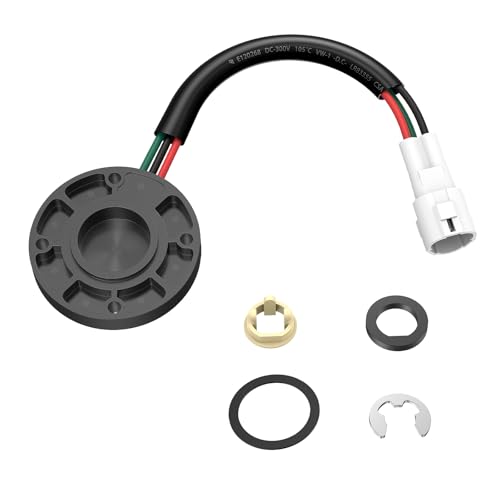
Fits the Following Cart(s): Applicable to Yamaha G22/G29/Drive/YDRE Electric Carts with Hitachi DC Motor.(NOTE: Fits 2007-2014 G29 YDRE Models and 2003-2007 G22 Electric Models)
How GPS Speedometers Measure Speed Without Touching Water
A GPS speedometer calculates your boat’s speed over ground (SOG) by tracking your position changes via satellite signals. Unlike paddlewheels, which measure speed through water contact, GPS units listen to signals from multiple satellites to determine your exact location over time. They then either calculate the speed based on how quickly your position shifts or measure the Doppler shift in the carrier signals to instantly derive your velocity. The horizontal component of this measurement becomes your SOG.
Since it does not rely on water contact, a GPS speedometer requires no sensor calibration. It remains unaffected by fouling, debris, or choppy water conditions that can interfere with traditional paddlewheel sensors. Instead, it provides a live readout showing your actual progress over the bottom. However, its accuracy depends on a clear view of the sky; obstructions like bridges or tall trees and multipath reflections from nearby structures can reduce reliability. Despite these limitations, GPS speedometers are widely favored for their versatility, offering accurate speed readings across open ocean and inland lakes without the need for water sensors. For example, many pontoon boat gauges integrate GPS speedometers to avoid the maintenance issues common with paddlewheels on these shallow-water vessels. A similar trade-off exists when choosing between an oil pressure light and gauge for your engine, as each provides different levels of detail and reliability in monitoring performance. Similarly, choosing the right anchor light for sailboat ensures reliable visibility while at anchor, though such lights do not affect speed measurement.
How GPS and Pitot Differ on Current and Wind Effects
GPS measures speed over ground (SOG), which is directly affected by currents, while the pitot system measures speed through water (STW). Because of this, their readings respond differently to current and wind effects. If you’re moving with a water current, your GPS SOG increases, showing faster progress over ground, while the pitot reading remains steady, reflecting only water speed. Against a current, SOG decreases, whereas the pitot measurement stays consistent. For ice fishing, anglers often rely on devices like the Garmin Striker 4 to track GPS speed and location on frozen lakes. To ensure accurate readings from the pitot system, you should periodically check the fuel sending unit for corrosion or blockage that could indirectly affect the boat’s electrical performance.
Wind, on the other hand, does not directly influence these readings but affects your boat’s actual behavior. Strong wind can cause side slip, changing your course over ground without affecting water speed. This drift widens the gap between SOG and STW even if your engine power remains steady. By comparing both measurements, you can better understand how current and wind are affecting your boat’s true movement, helping you distinguish between actual progress and external influences.
Common Problems That Mess Up Your Boat Speedometer
Even if your boat speedometer worked fine last season, several common problems can quickly cause it to malfunction. Start by inspecting the pitot pickup; a clogged hole from sand or mud can block airflow, making the needle stick at zero. A kinked hose can restrict pressure, resulting in erratic readings, while leaks or cracks may completely drop the signal. Don’t overlook a faulty pitot sensor or a failing gauge, as these can mimic hose issues.
Electrical problems are another common culprit. If the gauge stays dead despite clear plumbing, corrosion inside the dash unit might be the cause—moisture exposure can lead to connections failing. Calibration errors can also occur after hose repairs or sensor swaps, throwing off your readings. To troubleshoot, inspect the entire hose path for pinches or obstructions, and check connections at both ends. Loss of speed data is often caused by a fouled or blocked speedo tube that can be visually inspected and gently cleaned with a small drill bit. If everything appears intact but the needle still won’t move, replacing the gauge is likely necessary. Address these issues first before digging deeper into potential fixes.

Pitot tube delivers accurate speedometer reading

✔It can be used with any pressure driven speedometer up to 80 mph, weed-resistant system provides the steady water pressure required for accurate readings.
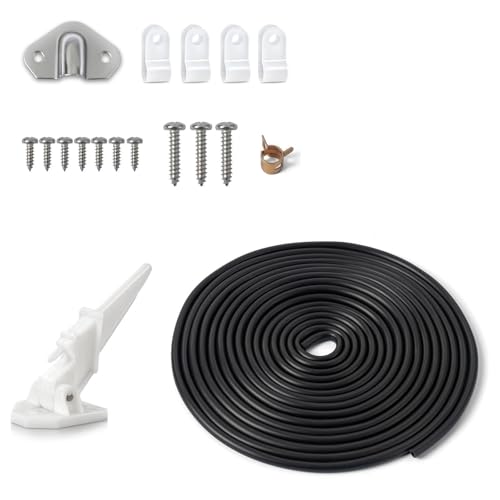
【Complete Marine Boat Speedometer Kit】 Our marine boat speedometer kit includes 1 yacht speedometer, 1 metal case, 6m/19.69FT hose, and all mounting parts. The sensitive boat speed sensor captures real-time water pressure, delivering accurate 0-60MPH/0-60KNOTS readings. Perfect for replacing outdated or unreliable boat speedometer pickup systems on yachts, boats, and ships.
Pitot, Paddlewheel, or GPS: Which Gauge Fits Your Boating Style?
GPS is your best option if you want an accurate speed over ground reading without the hassle of installing water pickups. Unlike pitot or paddlewheel gauges that measure water flow, GPS provides a direct measurement of your actual progress over the seabed, making it ideal for navigation and cruising. It’s easy to integrate with modern marine electronics, requires no routine cleaning, and stays free of marine growth that can affect water-based sensors. While water-based gauges can be more precise at very low speeds, GPS offers a clear, consistent readout across all speeds, especially useful if your boating involves long-range travel or complex navigation routes.

The Speedometer gauge with TFT Screen, it display the range clearly. 9-32VDC Working Voltage, Speed Meter Gauge is IP67 waterproof and anti-fogging protection.

【Function】7 Solid Color Settings will meet your requirement. You can switch color of light you like-Colors Include Blue, Red, Green, Teal, Purple, White & Yellow

【Features】85mm (3-3/8") GPS Speedometer Readings from 0-35 MPH & 0-55 KM/H. GPS Speedometer display car driving speed in real time. Let you to stay within the speed limit for safe driving