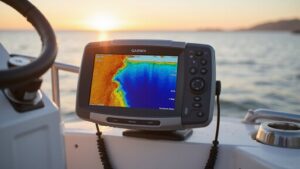
Ever wonder what fish actually look like on a fish finder screen? It’s not their real shape, but certain displays can tell you if a fish is active or just resting.
Recognizing these signals can help you know when to cast or hold back. Keep reading to learn how to identify fish and other underwater features on your fish finder.
How to Tell a Fish From a Weed, Log, or Bait Cloud on Sonar
A fish usually appears as an arched target or a small dot suspended off the bottom on sonar. To distinguish it from weeds, logs, or bait clouds, look for specific shapes and patterns. Weeds appear fuzzy with a vertical orientation, rising from the lakebed, while logs show as solid, well-defined structures anchored on the bottom. Bait clouds form dense, suspended clusters of marks that lack individual shape. Fish signals are typically separate from the bottom and often located near or beneath these clouds. Adjusting the sensitivity and noise filters can help reduce false returns from drifting debris. Upgrading to a quality electric oil pressure gauge ensures reliable readings for your vehicle’s engine health. Applying sonar calibration sharpens the distinction between fish arches and false returns from drifting debris or weeds.
Underwater currents can cause bait and debris to drift into false patterns, making identification tricky. Proper sonar calibration helps clarify these signals by sharpening returns. This makes it easier to tell a single fish arch from a fuzzy weed patch or a rigid log. Relying solely on fish symbols can be misleading; examining the raw sonar returns provides a clearer view of what’s really there. Additionally, a fish’s air bladder creates a distinct separate arch on the display, unlike a stump or rock, which shows a hard return connected directly to the bottom.

Dual Beam Sonar: Choose from a narrow and a wide beam for great detail or a generous coverage area, helping you identify fish, structure and contours.

Clear Vu scanning Sonar shows you more of what is in the water around your boat; This high frequency sonar gives near photographic images with detailed representations of objects, structure and fish
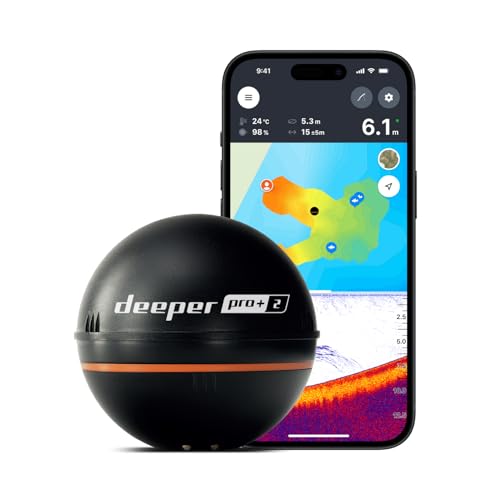
READY TO PERFORM: Wide beam, mid, and narrow beams make covering large expanses or drilling down on specific spots available at your disposal; Ideal for elite anglers who want to take their matchplay to the next level
Why Fish Show as Arches, Dots, and Blobs: And What They Really Mean
When you see fish displayed as arches, dots, or blobs on your sonar screen, it reflects how the fish are passing through the sonar cone rather than their actual shape. A full arch shows the fish crossed through the center of the cone where the sonar signal is strongest, indicating it moved directly through that point. Dots appear when fish stay stationary or move slowly, especially when using a narrow beam, preventing them from creating a full arch. Blobs represent stronger echoes from larger fish or dense schools, merging multiple signals into a single, larger shape. Keep in mind that these shapes do not depict the fish’s body but are about their movement through the cone’s coverage area. Sonar signal strength influences how thick and bright these shapes appear, providing clues about size and proximity. Faster boat speeds or quick fish movement can stretch or compress these marks, so always interpret their shape alongside their brightness and motion for a more accurate picture. Understanding the sonar cone coverage helps explain why marks appear differently depending on the fish’s position in the water column. For example, full arches often signal active predatory fish like bass or walleye. To get the most out of your screen, it helps to compare these shapes against the top fish finders for boats, which offer adjustable settings to refine what you see. Many beginner-friendly models include simplified display modes that make it easier to identify fish without advanced interpretation.

Down Imaging: Get a clear view of what's happening below your boat; View timber, brush, bridge pilings, rocks and any other structure with sharp detail


Easy-to-use 5” color fishfinder with new vivid scanning sonar color palettes to easily distinguish fish and structure
What Dot, Blob, and Streak Marks Tell You (Big Fish vs. Bait)
A thick dot or solid mark typically indicates a larger, stationary fish such as a game or target species. These marks show up as high-contrast, dense points because the fish reflects a strong sonar return. Baitfish, on the other hand, appear as clusters of tiny dots, soft cloud-like blobs, or tightly packed schools forming round or irregular masses. Don’t mistake a dense bait ball for a big predator—music small fish aggregations. The appearance of fish depends on their position relative to the transducer, so a fish directly under the boat may look very different from one near the sonar cone’s edge. Streaks on the sonar represent movement, especially from predators chasing prey. Solid streaks sitting just below a bait cloud indicate active predator motion. A CHIRP fish finder helps produce clearer, more defined marks because it sends a sweep of frequencies instead of a single pulse, reducing noise and improving target separation. Good sonar calibration and knowledge of the local marine habitat help you distinguish isolated marks, which are likely individual fish, from crowded returns that represent bait schools. Focus on the shape, density, and separation of these marks to interpret the fishing scene accurately. For catfish specifically, consider using a fish finder with high-contrast display to better spot bottom-hugging marks. When targeting crappie, pay attention to marks near brush piles or submerged structure as these often indicate crappie holding areas.

Easy-to-use 4-inch color fishfinder with new vivid scanning sonar color palettes to easily distinguish fish and structure; tilt/swivel bailmount bracket included


Dual Spectrum CHIRP Sonar: Delivers views of fish arches and fish-holding structure with two ways to search — Wide Mode for maximum coverage and Narrow Mode for detailed scanning; Precise 2D target separation powered by Low-Q transducer
Does a Thicker, Brighter Mark Always Mean a Bigger Fish?
A thicker, brighter mark does not always indicate a bigger fish. Several factors influence the sonar return’s appearance. Fish behavior can skew the size perception; a smaller fish swimming broadside may appear thicker than a larger fish facing head-on. The size of the swim bladder can also affect brightness, sometimes more so than actual body length. When multiple fish cluster together, their signals can merge into a single, more substantial-looking mark. Additionally, your screen settings—such as sonar calibration, gain, and color palette—can artificially inflate or reduce the apparent size of a mark. Just as a car’s horn relay location affects the horn’s performance, your fish finder’s installation and calibration settings directly influence how marks appear on screen. Consistent sonar calibration is similar to choosing the right stern light for a boat, as both require proper setup to ensure optimal performance. Understanding your sonar system’s electrical draw is as critical as knowing the fuel pump performance in your boat. Thickness usually provides more reliable clues than arch length. A short, thick mark tends to indicate a larger fish compared to a long, thin one. To interpret these signals accurately, compare brightness, shape, and isolation together. Always consider the context: thick, bright marks are more likely to be bigger fish when the return is distinct and not part of a group. Consistent sonar settings help ensure your comparisons are reliable.

Rugged, castable sonar device works with the free STRIKER Cast app (compatible with Apple or Android devices) to wirelessly stream sonar, locate fish and display them on your smartphone or tablet

Easy-to-use 7” color fishfinder with new vivid scanning sonar color palettes to easily distinguish fish and structure; tilt/swivel bailmount bracket included

READY TO GO - Easily find where your next catch is hiding with the Deeper START Fish Finder! The lightweight and sleek design makes for a seamless reel without any messy wires or fiddly external batteries required. Ideal for shore anglers and family trips who want to get on with catching!
3 Steps to Decode Depth, Position, and Fish Movement on Sonar
To decode depth, position, and fish movement on sonar, start by noting the depth reading, which shows water depth directly beneath your boat. Use this number as your reference point. Then, compare each target mark to the vertical depth scale: marks that sit higher indicate shallower objects, while those lower down are deeper. Keep in mind, the target’s position on the display only reveals its depth relative to your transducer, not its exact left-right location. Adjusting the sonar sensitivity can help reduce background noise and sharpen target clarity.
Next, observe how the mark forms over time. An arch shape with thin ends and a thicker middle suggests a fish moving through the sonar cone. If the arch is longer, it indicates slower movement; a shorter arch signals faster passage. Use the data on the right side of the screen for the most recent information. Finally, ensure your sonar is properly calibrated; accurate readings depend on correct setup. Repeated passes over a target help confirm whether you’re seeing fish, structure, or debris. Distinguishing real fish from clutter often requires recognizing how bait balls appear as dense, irregular blobs on the screen. Choosing a unit with high-quality performance ensures clearer returns and more reliable target separation across various water conditions.

Delivers uninterrupted depth readings from 2.5 to 600 feet on the largest display available on an In-Dash Depth Sounder up to 60 mph. Transducer Frequency-200 kHz

✦ Fish Finder and Depth Finder : It is a portable fish finder that could display approximate fish location and water depth. The sonar transducer can be attached to the hull of kayak or boat in order to understand the changing of water depth when you are moving by. The water depth detection range is between 3ft(1m) and 328ft (100m) when the transducer is completely immersed in the water.

Professional:The transducer mounting plate is specially designed for XNT transducer, Compatible models XNT 9 20, XNT 9 20 T, XNT 9 QB 90 T, XNT 9 QB 90, XNT 9 SI 180 T