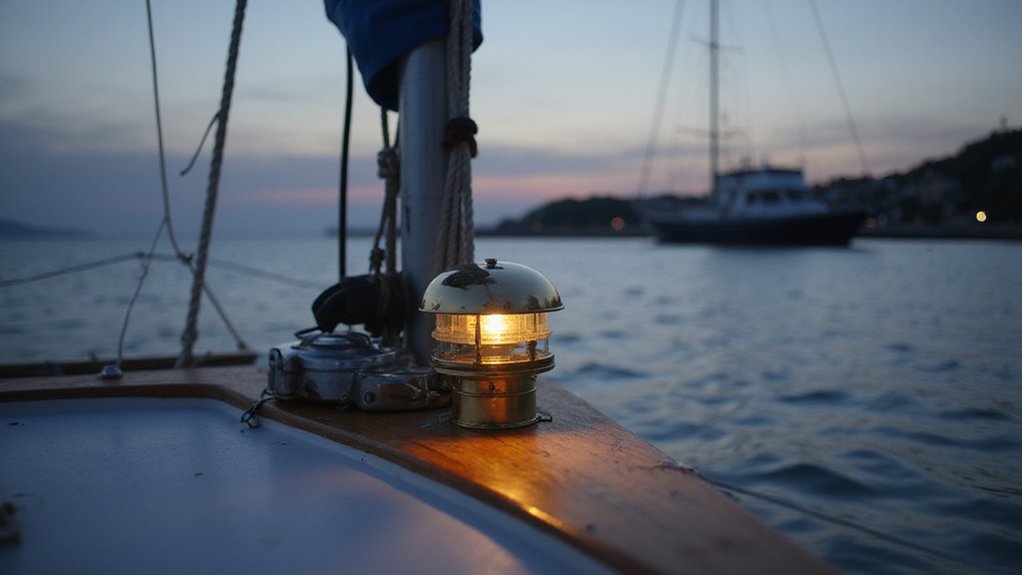
If you’ve ever wondered what exactly an anchor light is and when you need to display one, you’re in the right place. Essentially, it’s a white light you show from sunset to sunrise to let others know your boat is stationary in the water.
Knowing the rules about size, placement, and exemptions can help you stay safe and compliant on the water. Keep reading to get the full details.
What Is an Anchor Light (and Why You Need One)?
An anchor light is a white, all-around light that you display when your boat is at anchor. Showing this light signals to other vessels that your boat is stationary, making it visible from all directions. It is typically mounted high on the vessel, such as on the masthead, to ensure maximum visibility during nighttime or low visibility conditions. For boat owners, understanding this light is similar to knowing how a binnacle compass works, as both rely on clear, all-around visibility to ensure safe navigation and communication with other vessels. Using a reliable ram mount for your anchor light ensures the fixture stays securely positioned at the optimal height for clear, all-around signaling. Additionally, learning to interpret sonar returns on your fish finder can help you pinpoint optimal anchoring spots where fish are concentrated.
This light is essential safety equipment and is not just for decoration. It helps you comply with navigation rules by indicating your anchored status, allowing other boaters to easily see you and avoid collisions. Without an anchor light, your boat becomes a hidden hazard, significantly increasing the risk of a collision or allision — where a moving vessel hits a stationary one. Using an anchor light reduces this danger by clearly signaling that your boat is not underway, giving everyone on the water a safer environment and peace of mind.

360° All-Round Super Bright: 51PCS SMD2835 LEDs emit 6000-6500K daylight white light, this masthead lights ensure you remain visible to other boaters at night, significantly increase safety at night

Meets USCG requirement: 3NM
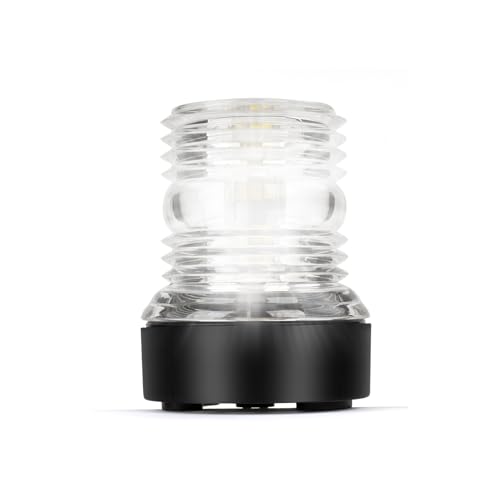
360° All-Round Visibility Navigation Lights: Meeting USCG’s requirement, providing full-circle illumination for enhanced marine safety. Ideal as masthead lights, boat stern light, or boat anchor light with continuous 360° white LED coverage.
Anchor Light Rules: When and Where Must You Display It?
You must display your anchor light from sunset to sunrise whenever your boat is at anchor in navigable waters. This is a clear requirement to ensure your vessel remains visible to others in low light conditions. Your anchor light must be a distinct, all-round white light visible for 360 degrees, not just illumination from deck lights or other sources. Position the light where it is least obstructed by sails, gear, or other parts of your ship, so it can be seen from all directions. To achieve a reliable 360-degree visibility, consider a clean wiring setup similar to that used for a horn relay.
If your vessel is under 50 meters, a single anchor light suffices. For vessels 50 meters or longer, you need two lights: one forward and one lower at the stern to cover all angles and comply with regulations. Modern lighting technology improves visibility with reliable, bright LED lights that meet navigation standards. During daylight hours, use a black ball shape instead of a light as an indicator.
It’s essential to distinguish between day and night signals. Night signals rely on the all-round white light, while daytime signals use a black ball when anchored. Following these rules ensures your vessel remains compliant and visible, preventing accidents and misunderstandings at sea. For anglers relying on advanced fishing electronics, a live sonar fish finder can also help locate anchor spots that keep you clear of hazards and other vessels. When choosing equipment, comparing top picks on quality can further ensure your anchor light meets performance standards.

Water and dust proofing:IP 65

360° Illumination: This LED waketower light provides all-round 360° visibility for enhanced safety on the water.

【Easy Installation 】This Wake Tower white LED tower light is designed to be compact ,It has bright lights,Easy and fast installation,Fixed installation with 2 screws;
Anchor Light Exemptions for Smaller Boats
If your boat is under 7 meters (23 feet), you can be exempt from displaying an anchor light. However, this exemption applies only if you are anchored in a low-traffic area. For instance, if you are in a small cove away from other boats, you may not need a light, but you should still consider a horn button for auditory signaling in case of emergency. Once you are in narrow channels, fairways, or any anchorage where other vessels normally navigate, the exemption no longer applies. The rule is designed to prevent collisions in busy waters, so if the risk of encountering other boats increases, you must display your light again. This is similar to how the correct transducer orientation for a trolling motor must be checked to ensure accurate sonar readings in changing conditions.
For designated inland anchorages, vessels under 20 meters (65.6 feet) also qualify for exemptions—these are specific zones where the rules are more flexible. But this broader exemption doesn’t mean you can ignore safe navigation practices. You cannot simply anchor in traffic lanes without a light just because your boat qualifies otherwise. When in doubt, showing an all-round white light is the safest choice, especially near busy routes. Being small doesn’t make you invisible to others, so always prioritize visibility. Anglers drilling holes in the ice often use portable fish finders to maintain situational awareness of what lies below.
Daytime Rule: Use a Black Ball Instead of Your Anchor Light
During the day, you signal your anchored status with a black ball displayed forward. The ball should be a solid black sphere, at least 0.6 meters (about 2 feet) in diameter for larger boats. For smaller vessels, compact folding versions are acceptable. The purpose is to visually identify your vessel as anchored, matching the anchor light’s function at night under COLREGS. Hoist the ball at the highest visible point on your vessel so it stands out with its unmistakable circular silhouette. Avoid obstructing it with sails or gear, ensuring approaching traffic clearly sees your anchored status. Keep in mind that this signaling device is especially important in most anchorages to prevent confusion or violations. Understanding how to interpret these signals is similar to interpreting the screen readouts on a fish finder for accurate on-water results. For catfish anglers relying on a stationary boat, using a fish finder for catfish ensures you stay positioned over the best structure while signaling your anchored status. A similar principle applies to fuel tank sending units, which must be chosen carefully to ensure accurate readings and proper function.
Where to Mount Your Anchor Light for Maximum Visibility
Mount your anchor light on the centerline or the fore part of your boat whenever possible. Placing the light on the centerline helps ensure a clear 360-degree arc, reducing the chance that hull features or spars will obstruct its visibility. If you cannot position it exactly on the centerline, choose the clearest, unobstructed spot available. Before finalizing the mount, you should test the electrical readings to confirm the sending unit is not causing a faulty power supply to the light. Choosing a depth finder with a reliable transducer can help you avoid mounting issues that interfere with other onboard electronics.
Make sure that nothing on your vessel blocks the light’s view. Shadows cast by antennas, spreaders, or other equipment can significantly diminish the light’s effectiveness. The mounting point must also support the required two-nautical-mile range without compromising the all-around visibility. Prioritize mounting at a height that provides good sightlines for maximum visibility, especially over potential obstructions. Unlike a pitot tube, which relies on water pressure for speed measurement, an anchor light demands a clear line of sight for its electrical signal.
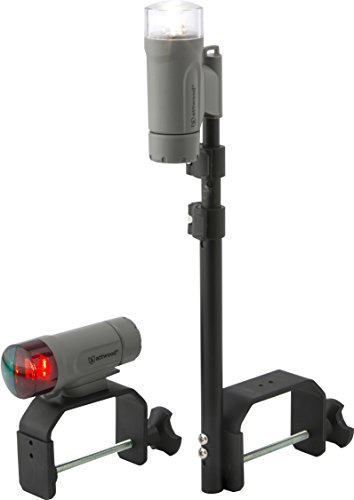
ULTIMATE NIGHTTIME VISIBILITY: Stay safe on small boats or tenders without 12V systems using these compact, high-intensity LED navigation lights

Pre-Wired 2-Minute Installation: Includes color-coded wires and stainless screws for direct mounting into standard 1.25-inch boat holes, hassle-free setup without requiring tools

【4 Pack】The package includes four boat pole storage clips (without screws). These marine pole clips are designed to securely hold 3/4-inch diameter light poles and are perfectly compatible with the Attwood 7571L7 marine pole light storage system.